
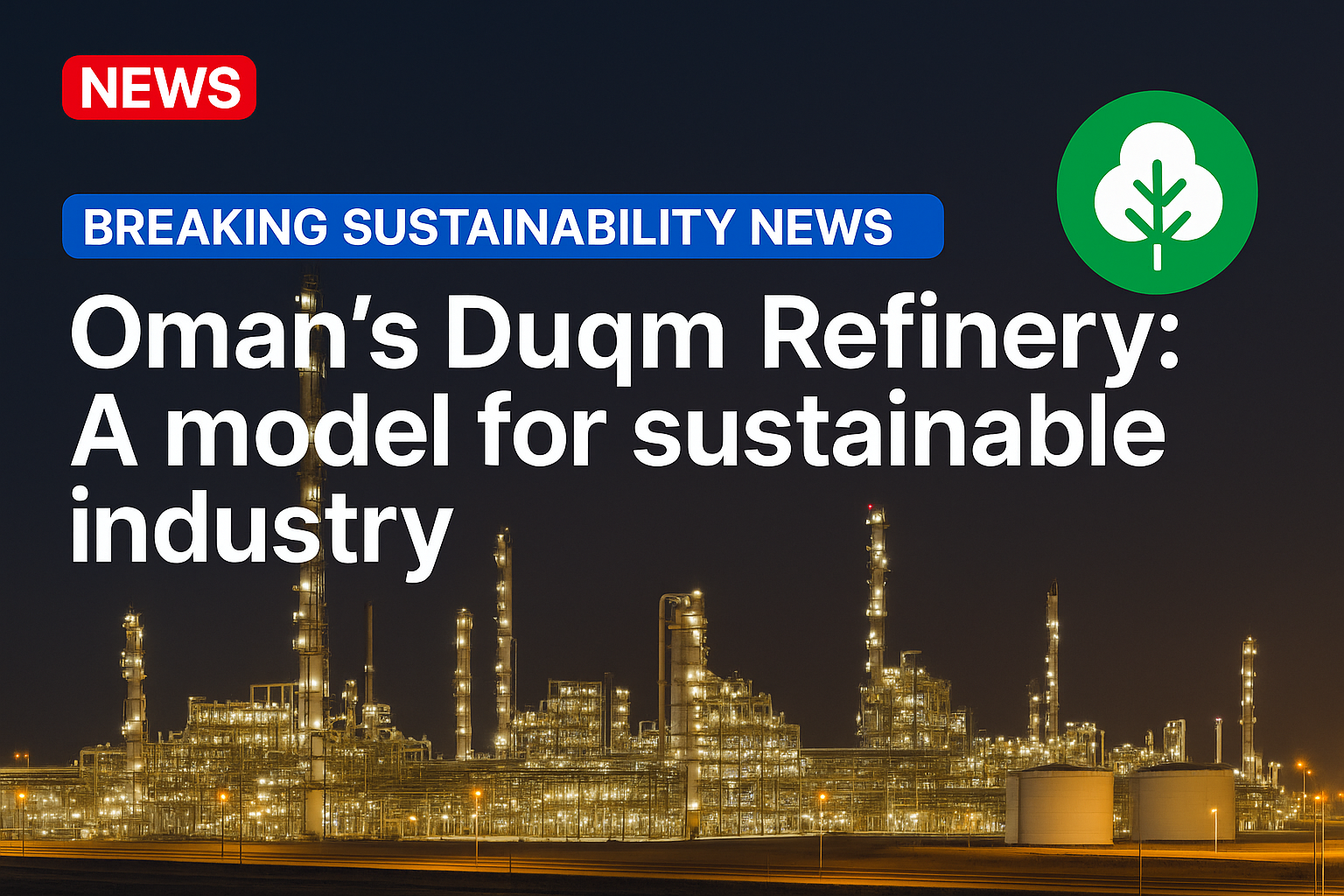
MUSCAT: The Duqm Refinery (OQ8), located in the Duqm Special Economic Zone, stands as a flagship example of Oman’s sustainable industrial transformation. Combining operational efficiency, environmental stewardship and community engagement, the refinery strengthens Oman’s position on the global energy map while advancing the goals of Oman Vision 2040 for a diversified and sustainable economy.
Engineer Abdullah bin Salim al Ajmi, CEO of Duqm Refinery, revealed that the facility is considering a 10 per cent increase in production capacity beyond its current 255,000 barrels per day, achieved through advanced operational efficiency without requiring new capital investment.
Built at a cost of RO 3.5 billion ($9 billion), the refinery reached full capacity in early 2024 following a smooth trial period and successfully passed its lenders’ reliability test within just ten months — one of the fastest achievements globally in the refining sector.
Since commencing full operations, over 560 petroleum shipments have been exported to international markets without any operational incidents. Exports peaked in August at around 295,000 barrels per day, demonstrating both performance stability and strong global confidence in Omani products.
The refinery produces around 130,000 barrels of diesel, 61,000 barrels of naphtha, 22,000 barrels of jet fuel and 15,000 barrels of LPG daily. More than half of its exports comprise middle distillates, in line with global demand for higher-value, cleaner fuels.
Engineer Abdullah bin Salim al Ajmi, CEO of Duqm Refinery,
To enhance flexibility, the refinery has diversified its crude feedstock, processing 11 types of crude, including Iraqi Basra and West African grades, reducing reliance on Omani and Kuwaiti crudes. It is also working to upgrade low-margin products such as naphtha into higher-value reformate, while boosting middle distillate output.
In sustainability, the refinery operates a 47,000 m² solar power system generating 6.2 gigawatt-hours annually and converts 85 per cent of hazardous waste into energy under a circular economy model. It also reused 3.4 million cubic metres of water and planted over 2,000 seedlings in 2024 to promote afforestation and biodiversity.
Economically, the refinery’s local procurement reached RO 158.6 million ($412.4 million) in 2024, with RO 15 million channelled to SMEs — nearly 9.5 per cent of total local spending — reflecting OQ Group’s support for local content. The project has stimulated economic activity in Al Wusta Governorate, generating opportunities across logistics, energy and contracting sectors.
On the social front, over 30 community initiatives were implemented last year, benefitting 31,000 people, including the On the Green Path environmental education programme, the Knowledge SME support initiative and the Oxford University Summer Leadership Programme.
Training and national capacity building also remain key priorities, with 22,000 training hours delivered and Omanisation rising to 67.5 per cent, exceeding targets.
Engineer Al Ajmi emphasised that Duqm Refinery’s success lies in balancing economic growth and environmental responsibility, making it a national model of industrial excellence and a cornerstone of Oman’s sustainable future.
Source: https://www.zawya.com/