
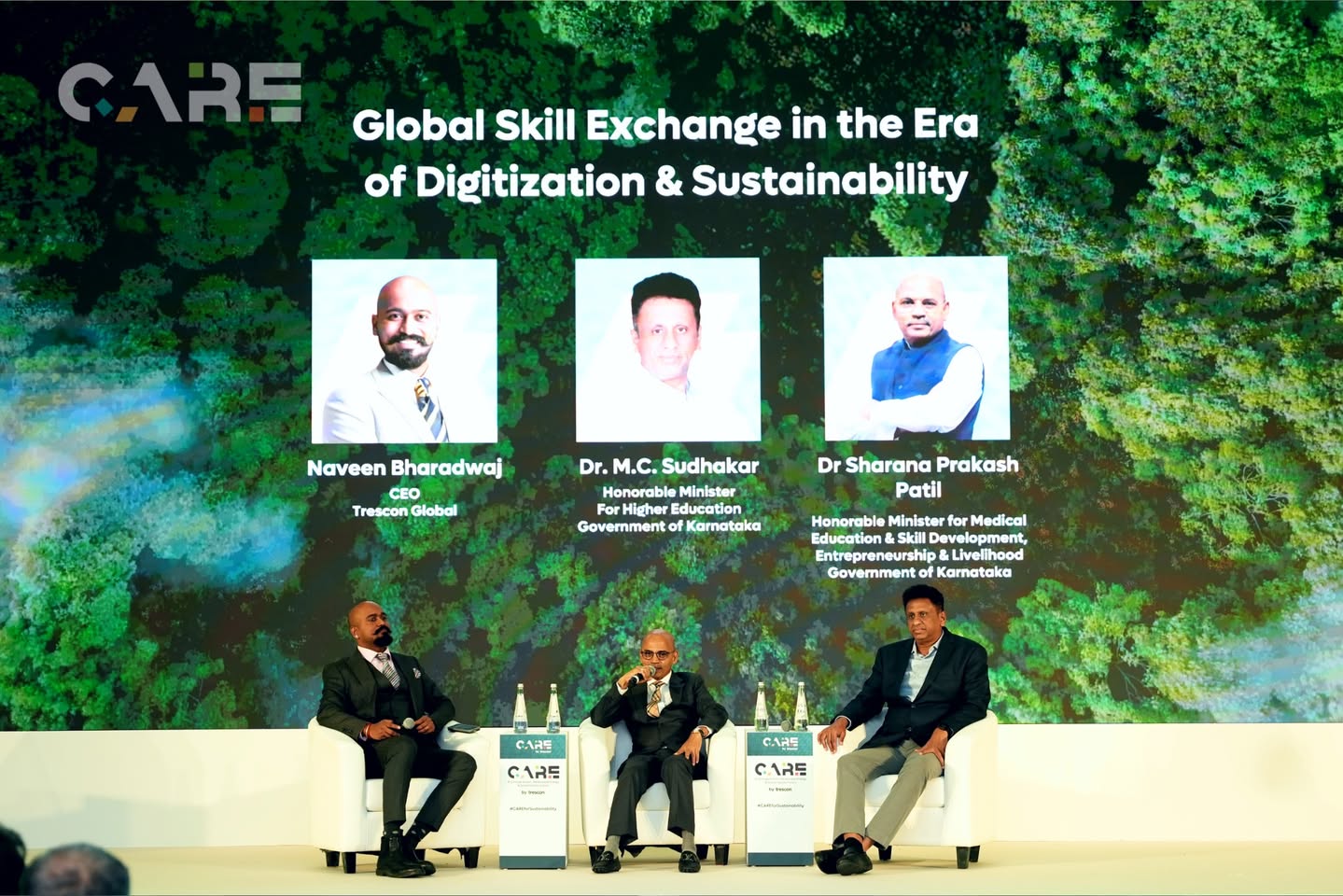
Dubai, UAE — As CARE MENA 2025 continued to examine the systems powering smart, sustainable infrastructure across the region, the focus turned to the most critical enabler of all: people.
In a strategic session on workforce development, Naveen Bharadwaj, Group CEO of Trescon, hosted two senior leaders from the Government of Karnataka:
- Dr. M.C. Sudhakar, Honorable Minister for Higher Education
- Dr. Sharana Prakash Patil, Honorable Minister for Medical Education & Skill Development, Entrepreneurship & Livelihood
Together, they explored how global collaboration can accelerate the development of the talent pipelines needed to support the green economy and digital transformation.
A Convergence Reshaping the Global Workforce: Digitization + Sustainability
The discussion spotlighted how the intersection of digitization and sustainability is creating entirely new categories of high-demand jobs across the world.
Roles highlighted included:
- Renewable energy technicians
- Circular economy designers
- ESG and sustainability analysts
- Climate and environmental data scientists
- Green supply chain specialists
- Carbon accounting and reporting professionals
- Smart infrastructure and energy system engineers
These roles didn’t exist at scale a decade ago — but will define the global labor market for decades ahead.
Education Must Move Faster — Through Partnerships, Not Silos
Ministers Sudhakar and Patil emphasized that preparing students for these emerging careers requires:
1. Government–University–Industry Collaboration
Skill development programs must be co-designed with employers, ensuring education aligns with real-world needs.
2. Digitally Empowered Learning Ecosystems
AI-driven platforms, virtual labs, micro-credentialing, and upskilling pathways must become standard across higher education.
3. Sustainability Integrated Across Disciplines
Climate literacy can no longer be confined to environmental programs — it must be embedded across engineering, business, healthcare, and vocational training.
4. Global Skill Mobility and Exchange
Cross-border partnerships allow students and professionals to access global best practices while supporting workforce shortages across regions.
A New Opportunity: Skills Will Define the Green Transition
One of the defining insights of the session was clear:
“The green transition isn’t just creating jobs. It’s redefining what skills matter.”
As nations race to build renewable energy capacity, redesign supply chains, and adopt smart infrastructure, human capability becomes the most essential resource for achieving net-zero ambitions.
The session affirmed that the MENA–India collaboration represents a powerful opportunity to scale talent development and align it with global sustainability goals.
Stay tuned for more updates from CARE MENA 2025.
Learn more: careforsustainability.com
#CARE2025 #CAREMENA #SkillDevelopment #FutureOfWork #GreenJobs #SustainabilitySkills #DigitalTransformation #ClimateAction #Dubai #GovernmentOfKarnataka #Trescon