
Dubai, UAE — As CARE MENA 2025 continued to explore the systems shaping the region’s sustainable future, the spotlight turned to one of the most consumer-facing sectors undergoing rapid transformation: retail.
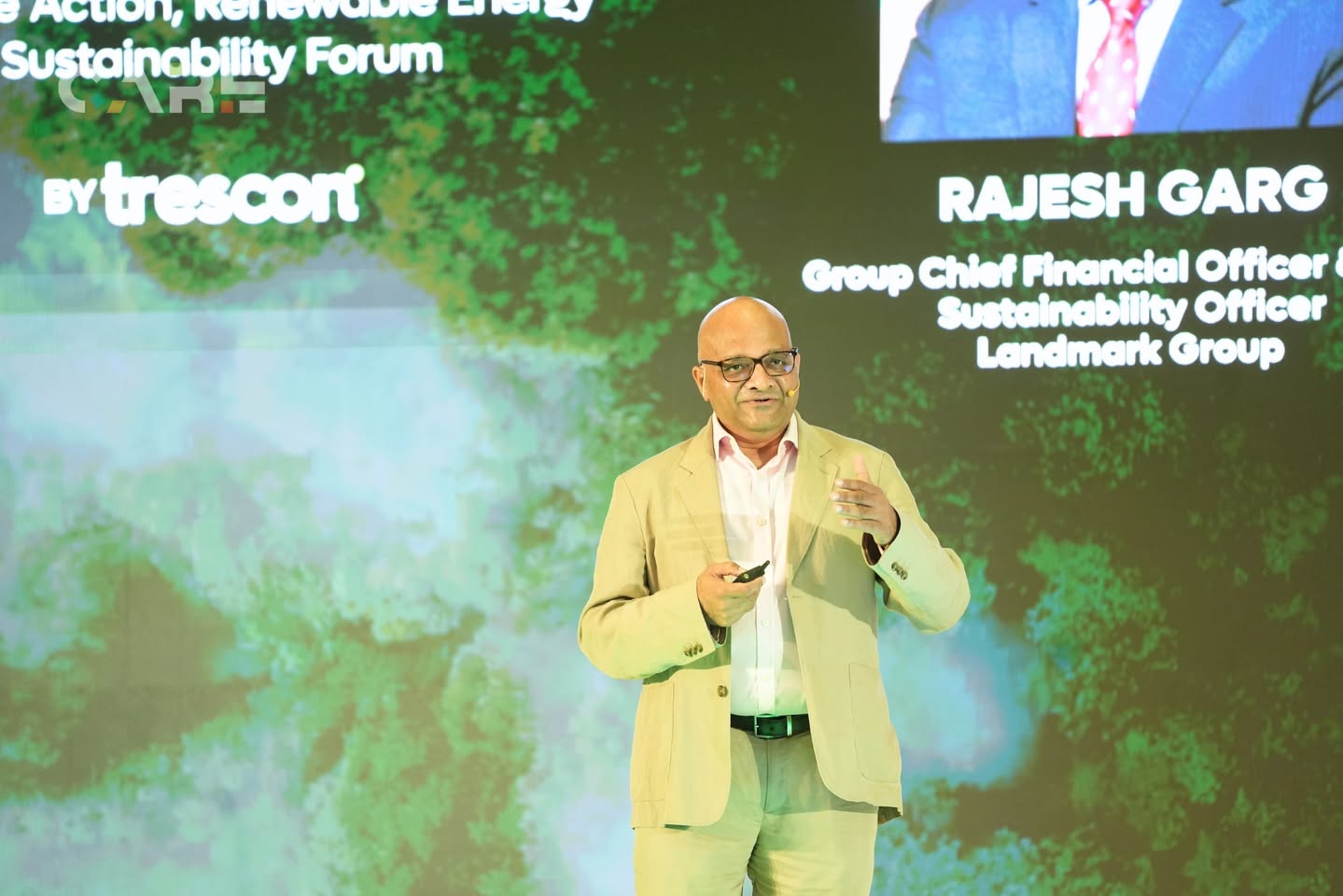
In a powerful keynote, Rajesh Garg, Group Chief Financial Officer & Chief Sustainability Officer at Landmark Group, offered an inside look at how one of the region’s largest retail conglomerates is reengineering its business model to align sustainability with long-term profitability.
With 2,200+ stores across 21 countries and a global network of 10,000+ suppliers, Landmark’s sustainability strategy has implications that stretch across borders, industries, and consumer behavior.
Three Pillars Reshaping the Future of Retail
Garg detailed Landmark Group’s integrated sustainability blueprint, built on three transformational pillars:
1. Sustainable Products
Landmark is collaborating with 10,000+ suppliers worldwide to transition to responsible materials, improve supply chain transparency, and embed circularity into product design from the start.
2. Sustainable Operations
The Group is undertaking a large-scale operational shift, including:
- Transitioning to solar-powered facilities
- Reducing logistics emissions through optimized routing
- Enhancing store and warehouse efficiency through energy-smart systems
These changes are cutting emissions and operating costs simultaneously.
3. Circular Consumer Journeys
Recognizing the growing consumer demand for responsible fashion, Landmark is:
- Establishing textile recycling facilities
- Designing systems to extend product lifespan
- Creating take-back and reuse pathways that close the loop
The Business Case: Sustainability Is Not a Trade-Off
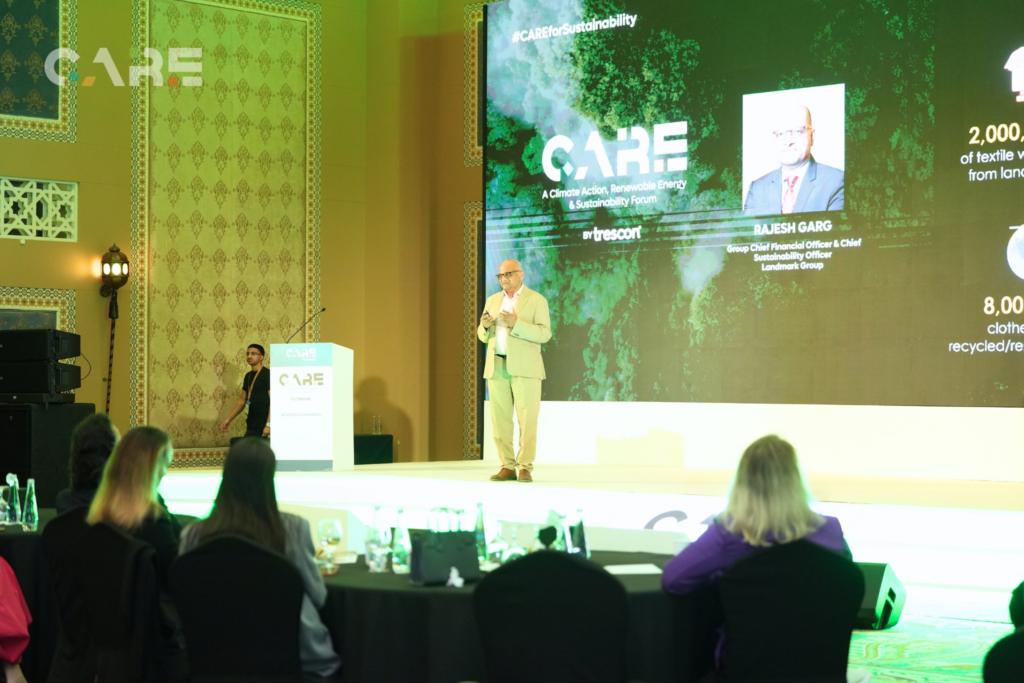
Garg delivered one of the session’s most compelling insights:
“Sustainability and profitability are not opposing forces. They reinforce each other.”
He demonstrated how:
- Energy efficiency directly reduces operating expenses
- Waste reduction unlocks margin improvements
- Responsible brands are gaining customer loyalty and long-term trust
The message resonated strongly across the summit’s business and sustainability communities: retailers that embed sustainability into their operating DNA are building stronger, more resilient, and more profitable businesses.
The Challenge Ahead: Scaling Across a Fast-Moving Industry
Despite major progress, Garg acknowledged the sector’s biggest hurdle:
Scaling sustainable practices across an industry historically driven by speed, volume, and cost compression.
Doing so will require industry-wide collaboration, standardized frameworks, supply chain transformation, and continued investment in innovation.
CARE MENA 2025 continues to reveal how leading companies across the region are redefining what sustainable growth looks like — not as a compliance exercise, but as a competitive advantage.
Learn more: careforsustainability.com
#CARE2025 #CAREMENA #RetailInnovation #CircularEconomy #SustainableRetail #ClimateAction #Dubai #EnergyEfficiency #ResponsibleBusiness #LandmarkGroup