
Key Takeaways
- Qatar aims for food self-sufficiency by increasing local production and reducing imports.
- Advances in agriculture, including greenhouse farming and technology like hydroponics, enhance efficiency and yield.
- Livestock and aquaculture initiatives boost local supply of red meat and fish, meeting protein demand.
- The National Food Security Strategy 2030 guides these efforts, focusing on sustainability and resource efficiency.
- Public-private partnerships drive innovation, infrastructure, and overall growth in food self-sufficiency efforts.
Qatar is making steady progress toward food self-sufficiency by expanding its local production. The goal is to rely less on imports and build stronger protection against global supply disruptions. In recent years, the country has increased output across several key food categories. These efforts are backed by national strategies and ongoing investment in agriculture and food systems.
Qatar food self-sufficiency driven by agriculture and technology
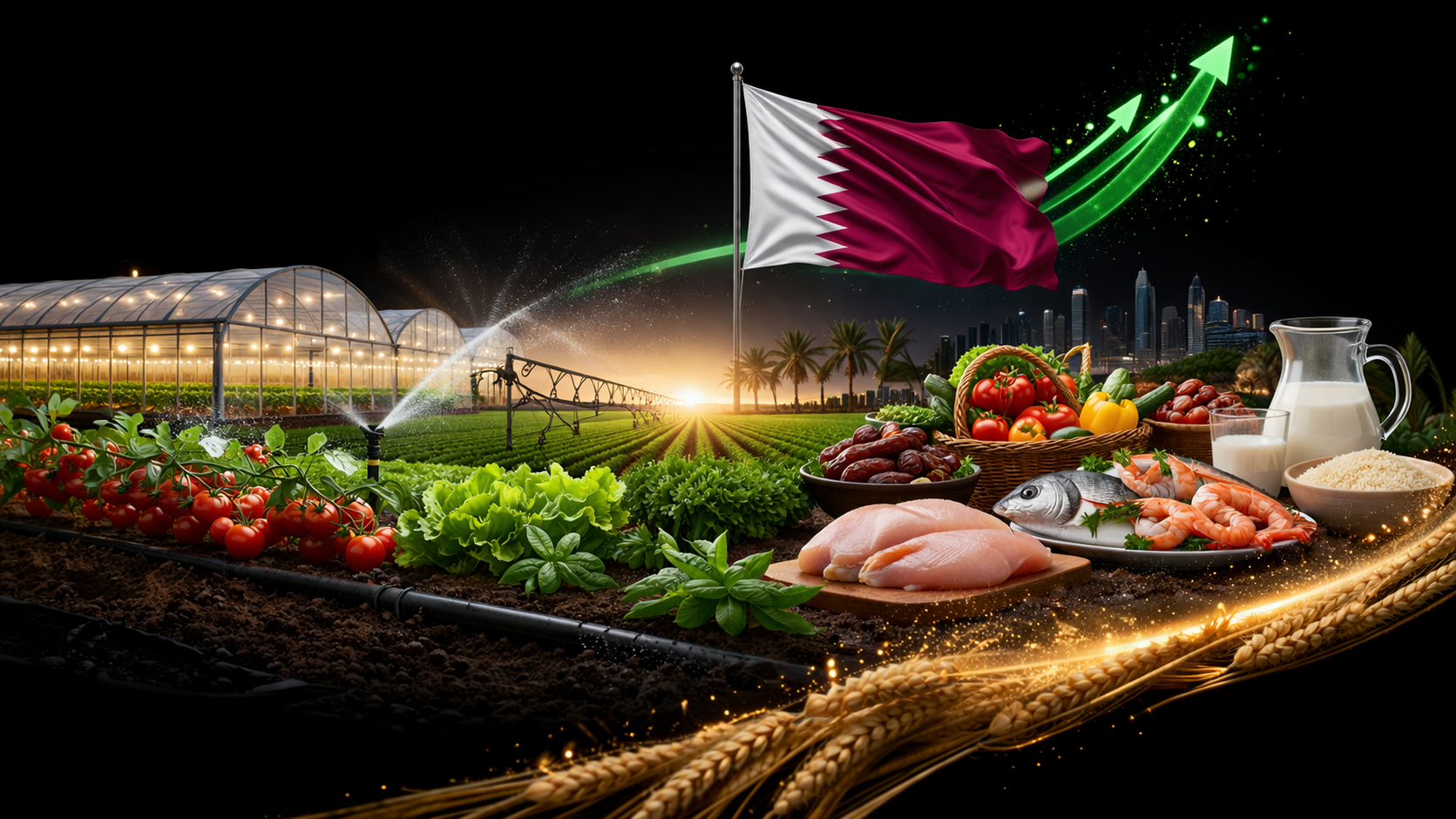
A major part of this progress comes from advances in agriculture. Greenhouse farming is now widely used to grow fresh vegetables, even in harsh climate conditions. Technologies like hydroponics and controlled environments are helping improve efficiency and increase yields.
Livestock initiatives are also boosting local supply. Programs focused on sheep and cattle are increasing red meat production. At the same time, aquaculture projects are expanding fish output, helping meet demand for protein within the country.
Qatar has already reached high levels of self-sufficiency in some areas. Dairy and poultry production now cover most domestic needs. Vegetable output continues to rise, especially during peak growing seasons. Fish production also accounts for more than half of local consumption.
Qatar food self-sufficiency supported by strategy and investment
These developments are guided by the National Food Security Strategy 2030. The plan emphasizes sustainability and efficient use of resources. It focuses on boosting local production of perishable items like vegetables, milk, and fresh meat, while also maintaining reserves of imported staples such as wheat and rice.
The private sector plays a significant role in this growth. Companies are investing in farming, production, and supply chains. Partnerships between the public and private sectors are helping drive innovation and build infrastructure.
Overall, Qatar’s food self-sufficiency efforts continue to move forward through coordinated planning and investment. Increased production and the use of modern technology are strengthening food security and reducing reliance on external markets.