
Key Takeaways
- The ACWA solar plant output limits in Saudi Arabia arise from grid management issues, not technical faults.
- As solar generation increases, grid capacity struggles to balance supply and demand, leading to temporary output restrictions.
- ACWA solar plant output limits underscore a broader challenge of grid flexibility needed for Saudi Arabia’s renewable energy goals.
- Investing in grid infrastructure and energy storage becomes crucial to maximize the benefits of solar energy expansion.
- Addressing grid constraints early will help ensure a smoother transition to low-carbon energy systems in Saudi Arabia.
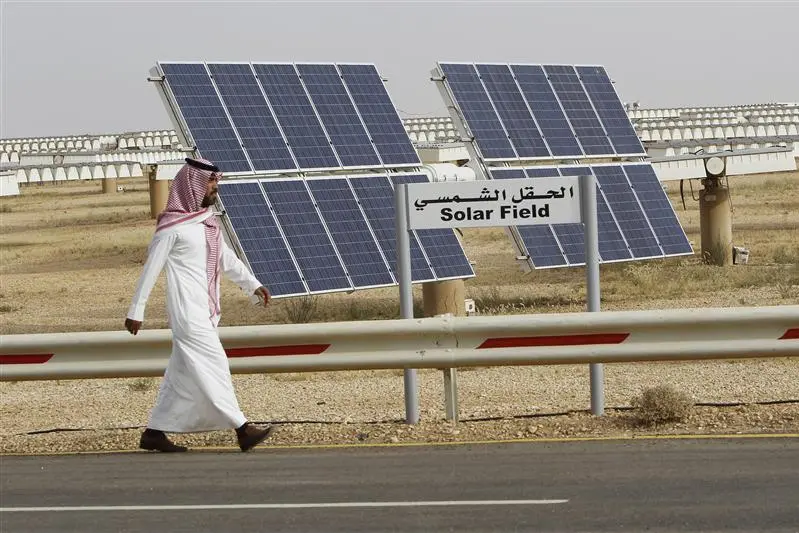
The ACWA solar plant output limits in Saudi Arabia are drawing attention to a new challenge in the country’s clean energy push, as rapid renewable expansion begins to test grid capacity.
Temporary Output Limits at Major Solar Plants
Saudi energy company ACWA Power has announced temporary output restrictions at two of its solar plants. These limits are not due to technical faults but are linked to grid management requirements.
As solar generation increases, balancing supply and demand becomes more complex. At certain times, especially during peak solar production, the grid cannot absorb all the electricity generated.
To maintain stability, operators may need to curtail output. This is a common issue in fast-growing renewable markets, where infrastructure development sometimes lags behind generation capacity.
ACWA Solar Plant Output Limits Reflect Grid Constraints
The ACWA solar plant output limits highlight a broader structural issue. Saudi Arabia is rapidly scaling up solar energy as part of its Vision 2030 strategy, but grid flexibility must keep pace.
Without sufficient storage or transmission upgrades, excess renewable energy can go unused. This creates inefficiencies and may impact project returns if not addressed.
Grid constraints are not unique to Saudi Arabia. Many countries expanding renewables face similar growing pains, especially during early transition phases.
Implications for Renewable Energy Expansion
Despite the temporary limits, Saudi Arabia remains committed to expanding its clean energy portfolio. Large-scale solar projects continue to be a cornerstone of the country’s energy diversification plans.
The situation underscores the importance of investing in grid infrastructure, energy storage, and smart systems that can better manage variable renewable output.
For investors and developers, it is a reminder that energy transition is not only about building capacity, but also about ensuring systems can handle it effectively.
What This Means for the Energy Transition
The development signals a shift in focus from simply adding renewable capacity to optimizing how it is integrated.
As Saudi Arabia and other GCC countries accelerate clean energy deployment, grid resilience and flexibility will become just as important as generation itself.
Addressing these challenges early can help avoid larger bottlenecks in the future and ensure a smoother transition to low-carbon energy systems.
Conclusion:
The ACWA solar plant output limits highlight a key reality of the energy transition. Rapid renewable growth must be matched by equally strong grid development. As Saudi Arabia pushes forward, solving these challenges will be critical to long-term success.