Rohini Behl, Head of Sustainability for South Asia Pacific, Middle East & North Africa (SAPMENA), L’Oréal, explores the L’Oréal for the Future programme
Please introduce yourself and your role.
Hi, I’m Rohini Behl and I lead sustainability for L’Oréal across SAPMENA – that’s South Asia Pacific, Middle East and North Africa. A vast and diverse region, home to three billion people across 35 countries from New Zealand to Morocco. A region with many of the world’s fastest-growing economies, and where the largest number of new consumers will come from in the next decade.
My role is all about ensuring our business grows responsibly across this incredibly dynamic region. That entails working across all parts of the business to mobilise our teams and deliver our L’Oréal for the Future sustainability commitments into action.
Transformation happens through actions – one product, one choice, one moment at a time. Making deliberate decisions every day can set in motion forces greater than themselves. As the world’s largest beauty company, we know we can and have the responsibility to drive real, meaningful change and we do this through four key pillars: steward the climate transition, safeguard nature, drive circularity and support communities.
What is the environmental footprint of the beauty sector?
The beauty sector’s environmental impact, as with all consumer-centric industries, comes mainly from Scope 3 emissions, covering everything from the sourcing of raw materials, the packaging, manufacturing, transportation, all the way to end of life of the product.
As leaders of the beauty industry, we recognised early on that economic performance and environmental and social responsibility are inseparable. Twenty years ago, we set our first industrial environmental targets in 2005. In 2013, we launched Sharing Beauty for All, our first sustainability programme, followed by L’Oréal for the Future in 2020.

2025 marks the mid-point for our L’Oréal for the Future programme, where we have reflected on our progress and learnings, refined our roadmaps and reinforced our commitments to 2030 and beyond (toward Net Zero by 2050).
L’Oréal has been committed to sustainability to protect the beauty of our planet and support vulnerable communities globally. We made choices very early on that were ahead of their time and which have helped us become better prepared to tackle the challenges facing the world today.
Our actions have been recognized by external experts. For example, we are the only company to have received a triple-A rating from the CDP for nine consecutive years, acknowledging our leadership and transparency in combating climate change, protecting forests and preserving water resources. Our efforts have also been recognised by other leading external organisations like Eco Vadis (awarding us Platinum status as a company amongst the top 1% in sustainability, demonstrating a high level of commitment to ethical business practices, social responsibility, and sustainable procurement), MSCI, Sustainalytics, or FTSE4Good.
How can the South Asia Pacific, Middle East & North Africa (SAPMENA) region drive the sustainability trajectory for the entire industry?
Climate change is already an everyday reality for many of our markets in SAPMENA, with rising temperatures and more frequent extreme weather events like droughts, floods, and heatwaves. We also have the largest global gender gap in our region. Add to that the fact that SAPMENA represents a huge and growing consumer base of 40% of the global population and 50% of the world’s new consumers over the next decade. The risk to sustainable growth is very real to us. Consumers also have rising expectations of brands, especially Gen Z. They expect brands to be transparent, ethical and genuinely committed to doing good for the planet and people. Therefore, we have an opportunity to build responsibly as we plant the seeds of growth (for the beauty industry).
As the #1 global beauty leader, L’Oréal’s contribution can be nothing but major. Sustainability is not a new concept or buzzword for us; it’s at the heart of everything we do, both globally and within SAPMENA. We’re addressing decarbonisation at every angle, across Scopes 1 & 2 and 3 from launching better product formulas, packaging with reduced intensity, using recycled materials, designed for refill & reuse – keeping end of life of the product in mind.
For example, we’re reducing the weight and volume of packaging, which contributes significantly to our environmental footprint. In L’Oréal SAPMENA, we’ve been using recycled PET in our bottles since 2022, and work with e-commerce partners like Lazada and Shopee for plastic-free packaging for parcels in Southeast Asia. Refills are a big focus – we’re constantly innovating to offer more refillable formats to help consumers reduce how much they consume. Our refills strategy is closing the desirability gap: driving great experience, great performance at a lower cost, while reducing waste.
Across our operations, manufacturing and distribution, we’re constantly optimising and delivering efficiencies as we grow. 100% of all our manufacturing and administrative sites (excluding safety installations) use renewable energy from a variety of sources across solar, wind and water since 2023. Our factory in Egypt uses recycled water in its operations, with the other factories to follow and we’re partnering with our suppliers to start measuring and optimising our carbon emissions at the point of sale and online.
As we accelerate, we want to demonstrate that business growth and environmental and social responsibility go hand in hand.
How can the industry balance between consumer demands, profit and environmental responsibility?
The SAPMENA region is where the biggest number of new consumers will come from in the next decade. As a global beauty leader, we’re committed to meet consumers demands and expectations for beauty responsibly.
Economic performance and environmental and social responsibility must go hand in hand; one cannot come at the expense of the other. L’Oréal SAPMENA has consistently delivered double-digit sales growth (since our inception in 2021) for the past few years, while making progress on our sustainability goals.
For example, we have halved the intensity of carbon emissions from transport of goods across our vast region, while doubling our volumes; showing that it is possible to “decouple” growth & emissions.
What is the importance of actively involving consumers, suppliers and the communities together for a holistic approach?
It takes a village to make real, lasting change. We need everyone in the ecosystem – governments, businesses, suppliers, retailers, consumers and communities – working together. L’Oréal is partnering with key retailers such as Sephora in the GCC, Bin Sina in the UAE, and Adore Beauty in Australia and several others across our markets to make refills readily accessible to consumers and drive real change.
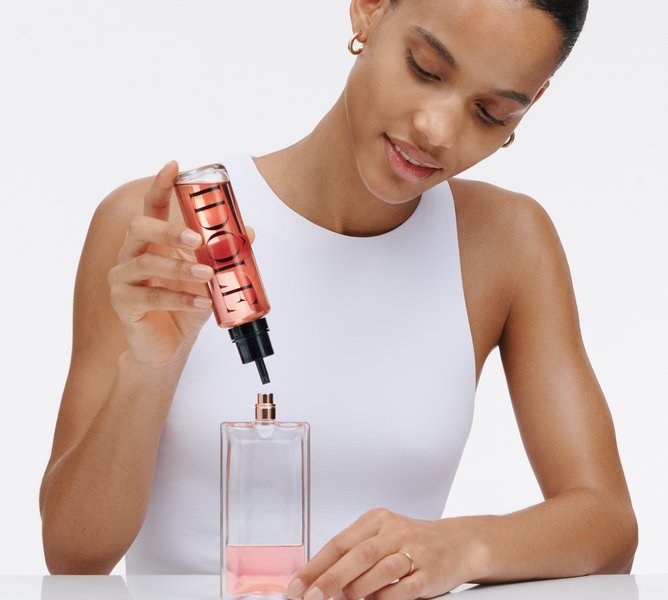
We’re bringing consumers along on our sustainability journey by helping them make informed, sustainable choices. We offer consumers refillable options across fragrances, hair care, skincare and makeup, empowering them to make choices that are better for the wallet and better for the planet.
We’re working with suppliers to digitise and measure their environmental footprint using tools like EcoDesignCloud for the design of point of sale materials. And in digital, we have evolved our partnership with French start-up Impact+ to measure and optimise the carbon footprint of our media plans while continuing to deliver a great media experience.
When it comes to communities, we partner with NGOs to deliver a vocational training program called Beauty for a Better Life, which trains women from vulnerable and socially disadvantaged backgrounds in skills like hairdressing, makeup or beauty advisory to gain access to employment and earn a livelihood. We’re extremely proud that we have launched this program across SAPMENA to contribute to closing the global gender gap.
What is the future of sustainability for the beauty sector?
In one word: Refills! We’re ramping up the development and rollout of refills across our brand portfolio – fragrance, hair care, skincare and makeup. This allows consumers to refill and reuse their favourite beauty products while reducing their environmental impact.
Refills aren’t just a fad, they are a key example of our circularity ambitions in action. We want to make refills desirable, accessible, and easy to use. It’s about delivering the same exceptional formulations consumers love, in innovative packaging designed to significantly reduce resources and environmental impact.
To make refills “the new normal”, we are making them “the new cool”. Well-loved beauty products that come in refillable options in SAPMENA include Kiehl’s Ultra Facial Cream, Lancôme Absolue Soft Cream, Kerastase Elixir Ultime and La Roche-Posay Effaclar Gel to name a few. Our major fragrance blockbusters and major launches are refillable, for example, Idôle by Lancôme, MYSLF by Yves Saint Laurent Beauty, Paradoxe by Prada, Acqua di Gio by Giorgio Armani Beauty. The savings are significant, both in materials and consumers’ wallets. Refilling a PRADA Paradoxe fragrance bottle saves 44% glass, 67% plastic, 100% metals, and 61% cardboard.
We’re also leveraging the aspirational power of our brands and celebrity ambassadors like Emma Watson and Dua Lipa to create awareness, engage and educate consumers on the benefits of refills. This June, to mark World Refill Day (16 June), L’Oréal has launched a global campaign across all brand offerings that are refillable inviting consumers to #JoinTheRefillMovement.
Source: https://sustainabilitymag.com/