
On December 10, 2025, the United Nations Environment Programme (UNEP) recognized five individuals and organizations as its 2025 Champions of the Earth, highlighting groundbreaking efforts to address climate change, forest loss, sustainable cooling, and resilient urban development.
The award, the UN’s highest environmental honor, was presented during the seventh session of the UN Environment Assembly in Nairobi, where delegates from 186 countries convened to discuss global environmental challenges and solutions.
The honorees exemplify the diversity of approaches required to confront the accelerating climate crisis. Pacific Islands Students Fighting Climate Change, a youth-led NGO, won in the Policy Leadership category for securing a landmark opinion from the International Court of Justice that affirmed nations’ legal obligations to prevent climate harm and protect human rights.
Their advocacy has elevated the voices of vulnerable island states in global climate law, demonstrating how legal mechanisms can be leveraged to hold governments accountable and protect populations at the frontlines of rising sea levels.
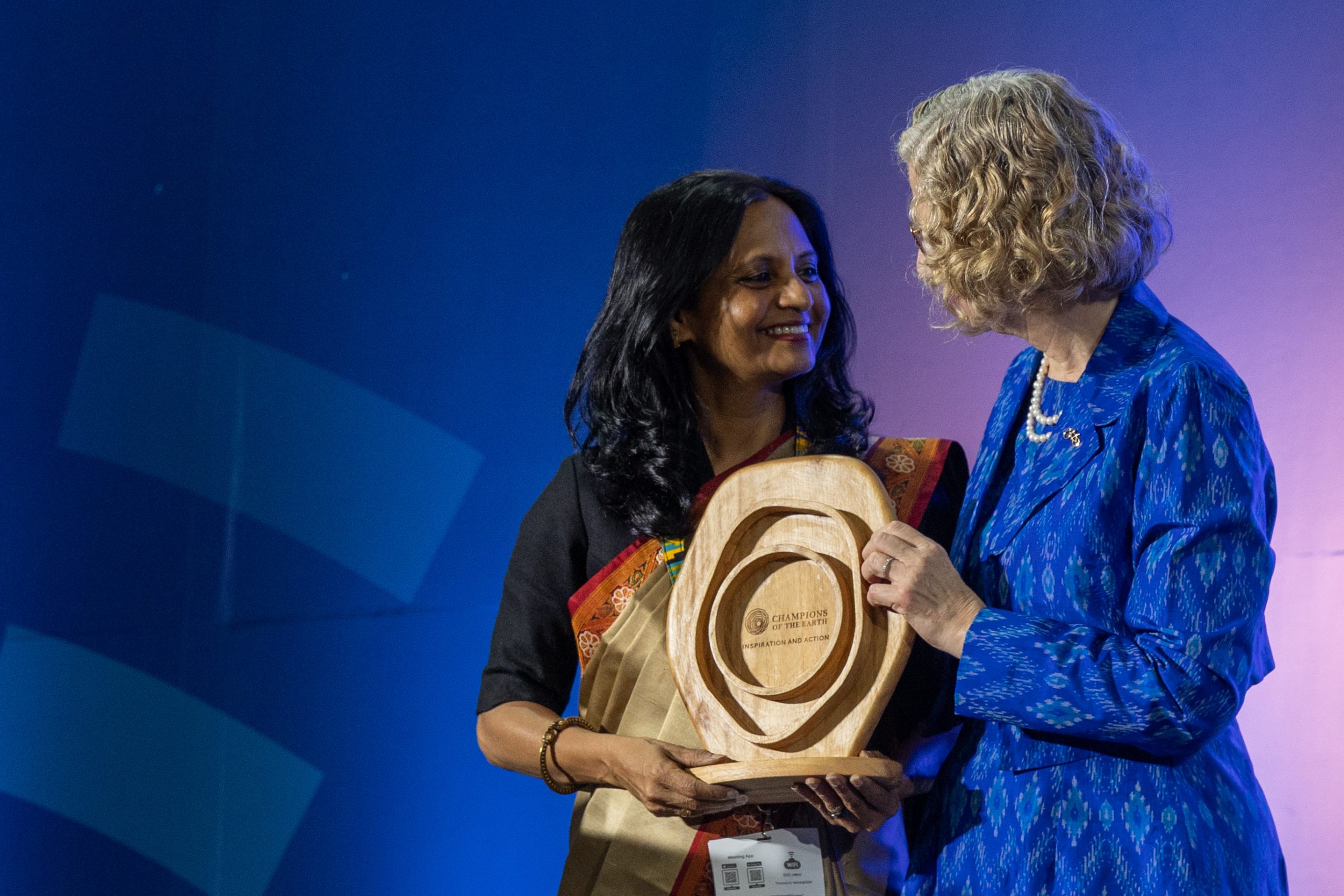
In India, Supriya Sahu, Additional Chief Secretary of Tamil Nadu, was recognized for Inspiration and Action. Her leadership in sustainable cooling and ecosystem restoration has expanded forest cover, integrated heat adaptation into infrastructure planning, and generated 2.5 million green jobs, directly impacting 12 million residents.
Projects across Tamil Nadu illustrate how combining nature-based solutions with public policy can mitigate urban heat stress, improve air quality, and provide livelihoods, offering a blueprint for other densely populated regions in Africa and Asia facing rising temperatures and urban growth.
Mariam Issoufou, founder of Mariam Issoufou Architects in Niger and France, received the Entrepreneurial Vision award for her climate-resilient architectural designs across the Sahel. Her projects, including the Hikma Community Complex in Niger, employ local materials and passive cooling techniques that reduce indoor temperatures by up to 10°C without air conditioning.
By blending cultural heritage with climate-smart design, Issoufou is demonstrating the potential for sustainable construction to transform energy use, human comfort, and economic productivity across arid regions; a pressing challenge for African countries grappling with extreme heat, growing urban populations, and limited access to affordable electricity.
Brazil’s Imazon was honored for Science and Innovation, reflecting the role of data-driven approaches in protecting critical ecosystems. The institute combines AI and geospatial analysis to monitor deforestation, strengthen legal enforcement, and support thousands of cases against illegal logging in the Amazon. Its work highlights the importance of transparency and technology in forest governance, a lesson for African nations such as the Democratic Republic of Congo and Cameroon, where forest loss threatens biodiversity, carbon storage, and local livelihoods.
The Lifetime Achievement award was posthumously awarded to Manfredi Caltagirone, former head of UNEP’s International Methane Emissions Observatory. Caltagirone championed evidence-based policy on methane emissions, influencing the European Union’s first regulatory framework on the pollutant and shaping global energy policy.
Methane reductions are now recognized as one of the fastest ways to slow near-term warming, emphasizing the link between industrial practices, energy policy, and climate outcomes, a lesson increasingly relevant for Africa’s energy and agricultural sectors.
The selection of this year’s Champions comes as the world faces an urgent climate tipping point. Global temperatures are projected to surpass 1.5°C within the next decade, while current commitments under the Paris Agreement remain insufficient.
For developing countries, the cost of adapting to climate impacts, including heatwaves, floods, and ecosystem degradation, could reach $310 to $365 billion annually by 2035, twelve times current levels of adaptation financing. UNEP highlighted that practical interventions, such as methane reduction, forest restoration, and resilient urban infrastructure, can simultaneously safeguard human health, support livelihoods, and slow planetary warming.
The award ceremony underscores the importance of integrating local and regional initiatives into broader global climate strategies. In Africa, the work of figures like Mariam Issoufou points to scalable models for resilient building design in arid and semi-arid zones, while lessons from forest governance and sustainable cooling programs offer frameworks for policymakers and private actors seeking to deliver climate adaptation and mitigation at scale. UNEP notes that climate justice, ensuring that vulnerable populations are protected and empowered, is a crucial complement to technological and policy interventions.
Since its inception in 2005, UNEP’s Champions of the Earth program has recognized 127 leaders whose work has catalyzed environmental solutions worldwide. This year’s cohort demonstrates the continued evolution of climate leadership, encompassing legal advocacy, public administration, scientific research, architectural innovation, and regulatory policy. By showcasing practical, high-impact approaches, the awards provide tangible evidence that measurable progress is achievable, even in the face of accelerating climate risks.
As Africa confronts rising temperatures, energy shortages, and deforestation, the initiatives highlighted by UNEP’s Champions of the Earth offer concrete pathways to resilience. Whether through regional climate justice campaigns, sustainable urban design, or strengthened forest governance, these interventions illustrate how leadership, innovation, and strategic action can transform both communities and ecosystems.
UNEP’s Executive Director, Inger Andersen, emphasized that solutions require leadership across every sector of society and that effective action today can shape the livability, productivity, and sustainability of future generations.
Source: https://africasustainabilitymatters.com/