
Kampala is trying to clean up its air, and the city is not treating it like a side project anymore.
At the Africa Clean Air Forum 2026 in Pretoria, the Kampala Capital City Authority presented the Ugandan capital as one of Africa’s more active urban clean air examples. Not perfect. Not finished. But moving.
The city is now using a mix of real-time air quality monitoring, community cleanups, cleaner transport planning, and new policy tools to reduce pollution. It is a practical kind of sustainability work. Less glossy. More street-level.
That matters because African cities are growing fast, and dirty air is becoming one of the most serious urban health problems on the continent.
Kampala Puts Clean Air at the Center of Urban Planning
Kampala’s clean air work is being shaped around one clear idea: pollution is not only an environmental issue. It is also a public health issue, a transport issue, and a city planning issue.
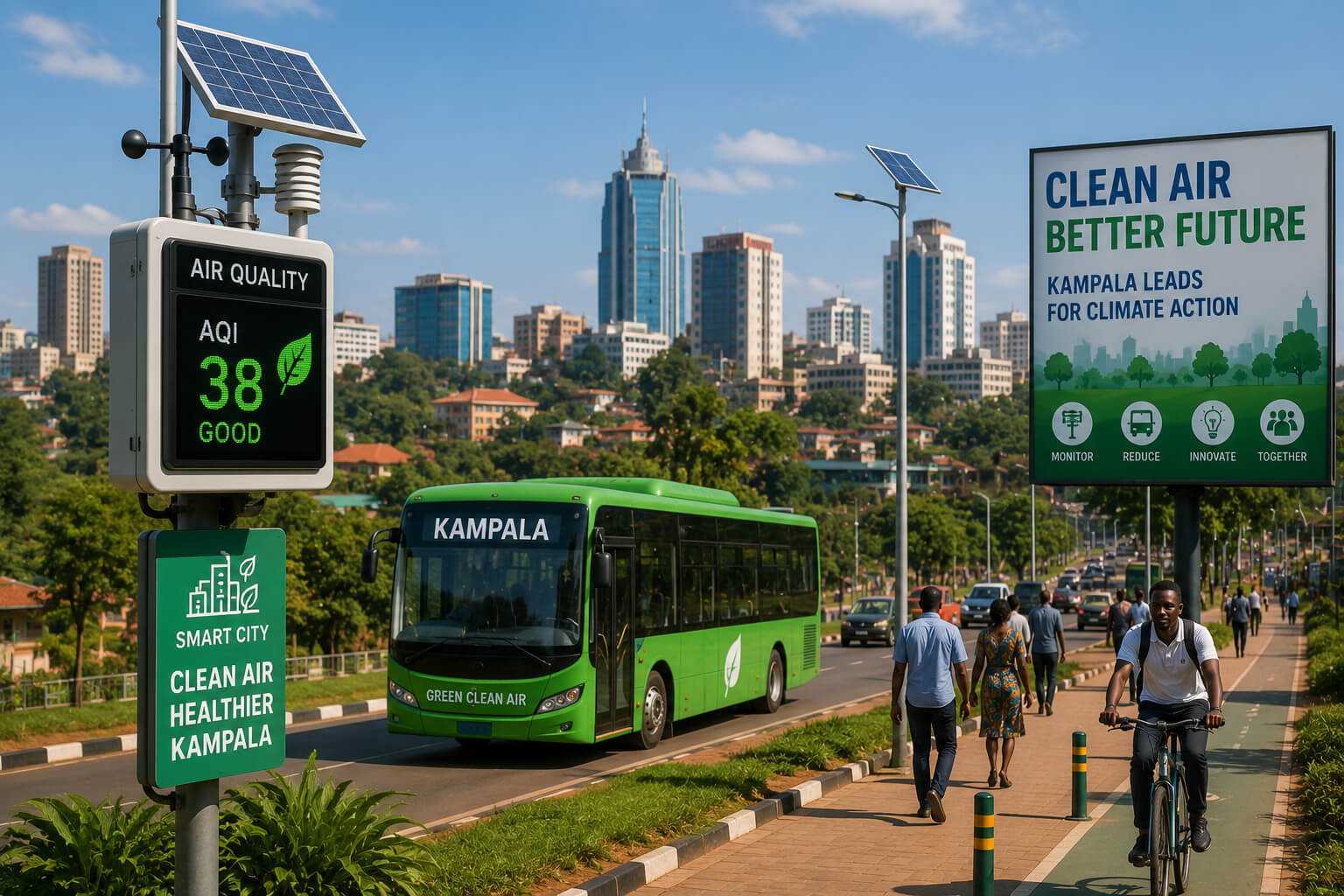
KCCA Executive Director Sharifah Buzeki told delegates at the Africa Clean Air Forum that Kampala has moved from limited monitoring capacity in 2018 to a much wider air quality system. The city now has 134 air quality monitoring stations, including hyperlocal sensors that provide real-time public data on pollution levels.
That is a big shift.
A city cannot fix what it cannot measure. For years, many African cities have had to make air pollution decisions with limited local data. Kampala is trying to change that by building a monitoring network that shows where pollution is worse, when it rises, and which interventions may actually work.
The Target Is Clear: Cut Pollution by Half by 2030
Kampala has set a goal to reduce average particulate matter levels by 50% by 2030.
That is ambitious. Maybe even uncomfortable. But it gives the city something measurable to chase.
The plan sits inside the Kampala Clean Air Action Plan 2025–2030, which focuses on monitoring, green mobility, stronger regulations, and community participation. The city is also preparing the Kampala Air Quality Management Bill, a proposed legal framework expected to strengthen pollution control.
This is where the story gets more serious. Sensors alone do not clean the air. Data only becomes useful when it changes policy, transport, enforcement, and public behavior.
Kampala seems to understand that.
Smart Technology Is Helping, But It Is Not the Whole Story
The clean air conversation often gets stuck on technology. Sensors. Dashboards. Smart systems. Real-time data.
Kampala is using those tools, yes. But the city is also trying to avoid the trap of making clean air sound like a software problem.
The monitoring stations help officials track pollution patterns. A planned traffic control centre is expected to improve traffic flow across signalised junctions, which could help reduce congestion and vehicle emissions.
Cleaner movement is also part of the plan. Kampala has pointed to cycling lanes, pedestrian walkways, electric buses, and incentives for electric vehicles and motorcycles as pieces of its green transport push.
That mix is important. Air pollution in a busy city does not come from one source. So the answer cannot come from one neat solution either.
Community Action Gives Kampala’s Plan More Weight
One of the stronger parts of Kampala’s approach is the role of residents.
KCCA has highlighted neighbourhood cleanups, journalist training for clean air awareness, and the involvement of Village Health Teams in community-level air quality work. That may sound small next to sensors and electric buses, but it is not.
Clean air policies often fail when people see them as government orders from far away. Kampala is trying to make air quality a shared civic responsibility.
That shift matters. A resident who understands pollution risks may support waste reforms. A journalist trained on clean air may report the issue more clearly. A health worker in a community may explain why smoke, dust, traffic emissions, and poor waste handling are not just everyday annoyances.
They are health risks.
Green Mobility Is Becoming Part of the Clean Air Agenda
Transport is one of the hardest parts of urban sustainability. Nobody wants dirty air, but everyone still needs to move.
Kampala’s clean air strategy includes pedestrian walkways, cycling lanes, electric buses, electric vehicle incentives, and better traffic management. These are not instant fixes. They also need funding, maintenance, enforcement, and public trust.
Still, the direction is clear.
A city that depends too heavily on congested roads and high-emission vehicles will struggle to improve air quality. Cleaner mobility has to become normal, not a luxury project for a few districts.
Kampala is not claiming the job is done. It is showing that air quality, mobility, and urban design now have to be planned together.
Recognition Is Coming, But the Pressure Remains
Kampala’s clean air work has already gained attention outside Uganda.
The city won the National Environment Sustainability Award in June 2026. It was also selected among 15 cities nominated for the Guangzhou International Award for Urban Innovation from more than 265 applicants worldwide. KCCA also said Kampala became the first African city inducted into the International Network of Tree Cities.
Good recognition. Useful recognition.
But awards do not remove the pollution. The harder test is what happens next: whether the monitoring system stays active, whether policies move from paper to enforcement, whether clean transport grows beyond pilot projects, and whether residents see real improvement in daily air quality.
That is the part that counts.
Why Kampala’s Clean Air Work Matters for African Cities
Kampala’s story is bigger than Kampala.
Across Africa, cities are expanding quickly. More people, more vehicles, more construction, more waste pressure, more energy demand. Air quality can easily become one of those problems that everyone feels but nobody manages properly.
Kampala is showing one possible path. Start with data. Add community action. Build transport reforms into the plan. Back it with law. Keep the public involved.
Simple to say. Hard to execute.
Still, the model is useful because it does not depend on one magic technology. It combines smart city tools with local participation, which is probably where African urban sustainability has to go.
Not just sensors on poles. Not just policy documents. Not just public awareness campaigns.
All of them together, messy as that sounds.
Kampala Is Building a Cleaner City One Layer at a Time
The clean air fight will not be won through a single forum announcement. Kampala still has to deal with traffic emissions, waste burning, industrial pollution, dust, enforcement gaps, and the everyday pressure of a growing city.
But the city now has a clearer system than it had before.
It has monitoring stations. It has a clean air action plan. It has community partners. It has green mobility projects. It has a 2030 target.
That does not guarantee success. It does show intent.
And in African urban sustainability, intent backed by data and community action is already a serious start.
Sources
- Africa Sustainability Matters – Kampala showcases Africa’s urban clean air leadership as community action and smart technologies drive sustainable cities
- Kampala Capital City Authority – Kampala showcases clean air leadership at Africa Clean Air Forum
- Nile Post – Kampala targets 50% reduction in air pollution by 2030
- New Vision – Kampala showcases clean air progress, community-led solutions