
Africa’s fashion industry is trying to build something bigger than another sustainability campaign.
Designers, policymakers, climate specialists and manufacturing leaders are calling for regional fashion systems that keep more materials, skills and economic value on the continent. The goal is not simply to make clothing with a smaller environmental footprint. It is to rebuild supply chains around local production, longer product lifespans and regenerative practices.
That shift was at the centre of the inaugural #AfricaTextileTalks forum, where participants discussed how textiles and fashion could support climate resilience, industrial growth and job creation across Africa.
Sustainable Fashion Is Not New to Africa
The language may be newer. Many of the practices are not.
Repairing clothing, reusing fabric, passing garments between family members and finding new purposes for worn materials have existed across African communities for generations.
These habits now sit comfortably inside what the global fashion industry calls the circular economy. Yet speakers at the forum argued that Africa should not treat sustainable fashion as a model imported from overseas.
It already has its own foundation.
South African designer Wanda Lephoto said the continent’s approach should grow from its cultural and historical experience. That means preserving craftsmanship, supporting local creative industries and designing clothes that hold value beyond one trend cycle.
The difference matters. Chasing the same high-volume fast-fashion model used elsewhere could leave African producers competing on cost while sacrificing the very qualities that make their work distinctive.
Fashion’s Environmental Cost Is Driving Change
The wider fashion industry is under heavy pressure to clean up its supply chains.
Clothing production consumes large quantities of water, energy and raw materials. Cotton farming can be particularly resource-intensive, while dyeing, finishing and transportation add further environmental costs.
The United Nations Environment Programme has repeatedly identified textiles and fashion as a major source of pollution, resource use and greenhouse gas emissions.
That scrutiny is changing what buyers ask from suppliers.
International brands, investors and regulators increasingly want proof of where materials came from, how workers were treated and how much carbon was produced along the way. African manufacturers that can offer traceability, responsible production and strong craftsmanship may find new openings in premium export markets.
But sustainability cannot become another expensive compliance exercise imposed on smaller producers.
Many African fashion businesses are small or medium-sized operations. They often lack the affordable finance needed to upgrade machinery, improve energy efficiency or document complex supply chains.
Without capital, the ambition stays on paper.
Africa Wants to Keep More Textile Value at Home
Africa produces valuable textile inputs, including cotton, but much of that material leaves the continent before it becomes a finished product.
The raw fibre is exported. Processing happens elsewhere. Finished clothing can then return at a much higher price.
Industry leaders want to break that pattern.
Building more spinning, weaving, dyeing, finishing and garment manufacturing capacity within Africa would allow countries to capture a larger share of the final value. It could also reduce long-distance shipping, support skilled employment and make regional supply chains less vulnerable to disruptions.
The African Continental Free Trade Area could help push that work forward.
AfCFTA is designed to increase intra-African trade while supporting industrial development, diversification and regional value chains. For fashion, that could mean cotton grown in one country, woven in another and turned into finished clothing elsewhere on the continent.
That sounds simple. In practice, it requires better infrastructure, workable trade rules, reliable transport and coordination between governments that do not always move at the same speed.
Still, the opportunity is real.
Regenerative Fashion Goes Beyond Producing Less Waste
Circular fashion often focuses on extending the life of existing products. Regenerative fashion tries to go further.
It asks whether materials can be produced in ways that restore soil, support communities and strengthen local ecosystems rather than simply causing less damage.
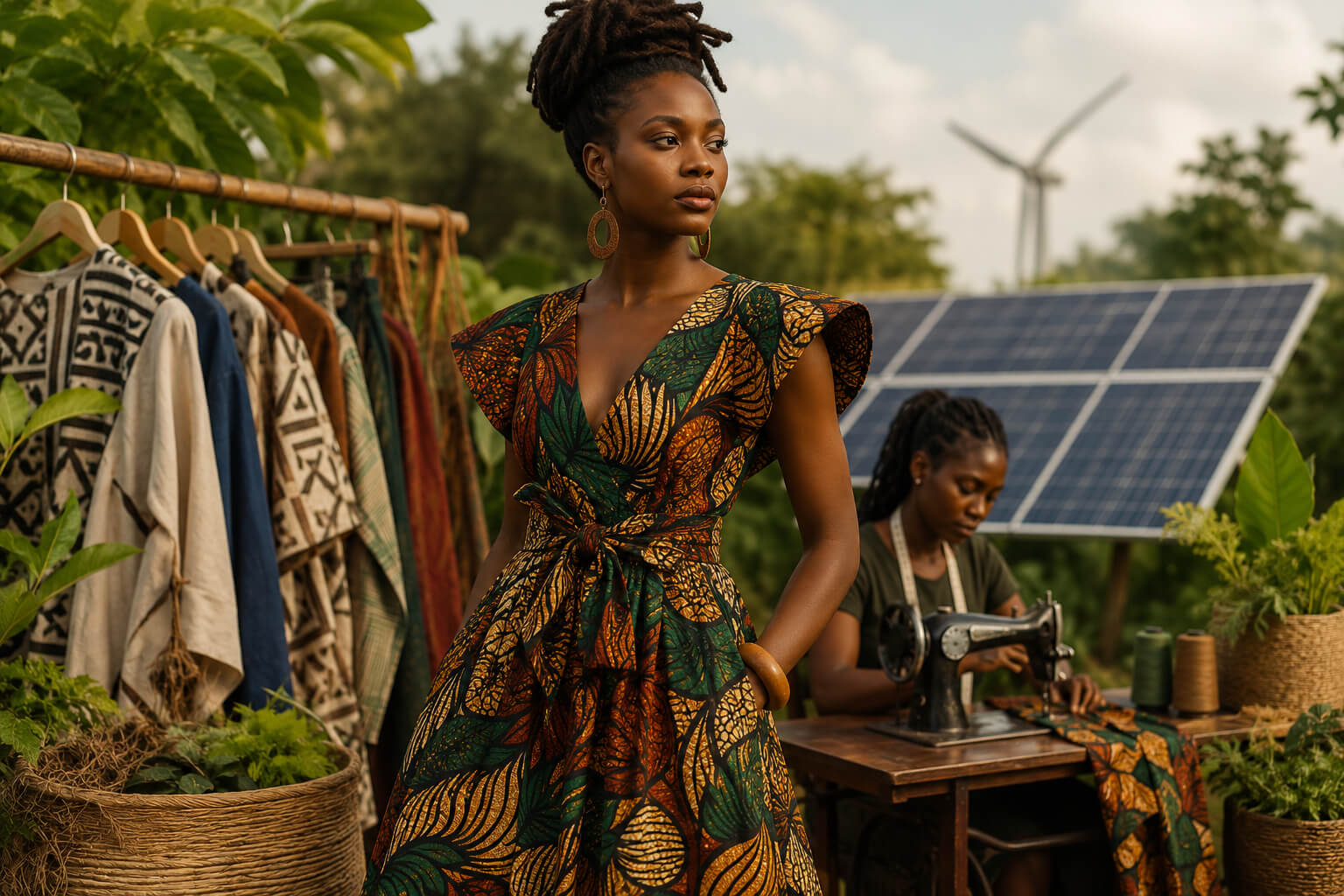
For African textile producers, that could involve regenerative cotton farming, natural fibres, lower-impact dyes, renewable energy and production models that give artisans and farmers a stronger position in the value chain.
The African Fashion Coalition has introduced a Blueprint for a Regenerative Fashion Future, calling for greater African ownership of the value created by the global fashion industry.
The framework centres on regional manufacturing, cultural preservation, circular business models, investment in sustainable materials and stronger links between designers, researchers, artisans and producers.
It is a broad agenda, and that may be unavoidable.
There is no single factory upgrade or recycled fabric that can fix an entire industry. Farms, manufacturers, logistics providers, designers, retailers and financial institutions all influence the final footprint of a garment.
Financing Remains the Difficult Part
The ideas are moving faster than the money.
Smaller fashion companies frequently struggle to secure affordable funding, especially for projects that may take years to deliver returns. New machinery, cleaner energy systems, certification and supply-chain tracking all require upfront investment.
Traditional lenders may see those businesses as risky. Sustainability-focused finance can also be difficult to access, packed with reporting requirements that smaller companies do not have the staff to manage.
Industry participants are calling for closer links between industrial policy and sustainable finance.
That could include grants for cleaner manufacturing, patient capital for growing brands, equipment financing and public investment in shared production facilities. Governments can also support training so that sustainability does not depend only on imported expertise.
The sector will not scale through fashion shows and policy statements alone.
Factories have to be built. Workers need training. Farmers need dependable buyers. Designers need access to markets.
A Bigger Industrial Opportunity Is Taking Shape
Fashion is sometimes treated as a cultural industry sitting outside serious economic policy. That misses its scale.
Textile and garment manufacturing can create jobs across farming, design, production, transport, marketing and retail. It can also provide opportunities for young people and women, who already play major roles in many parts of Africa’s creative economy.
A stronger regional fashion industry could support export diversification while reducing dependence on imported finished clothing.
The catch is that Africa must avoid becoming a low-cost production base for brands that keep most profits elsewhere.
Regenerative fashion will mean little if the environmental benefits are celebrated internationally while local producers remain underpaid.
The push now is for ownership, not just participation.
Africa’s sustainable fashion economy has the materials, cultural knowledge and creative talent to build a different kind of industry. Whether it succeeds will depend on finance, trade coordination and the willingness to invest in local production before global demand moves somewhere else.