
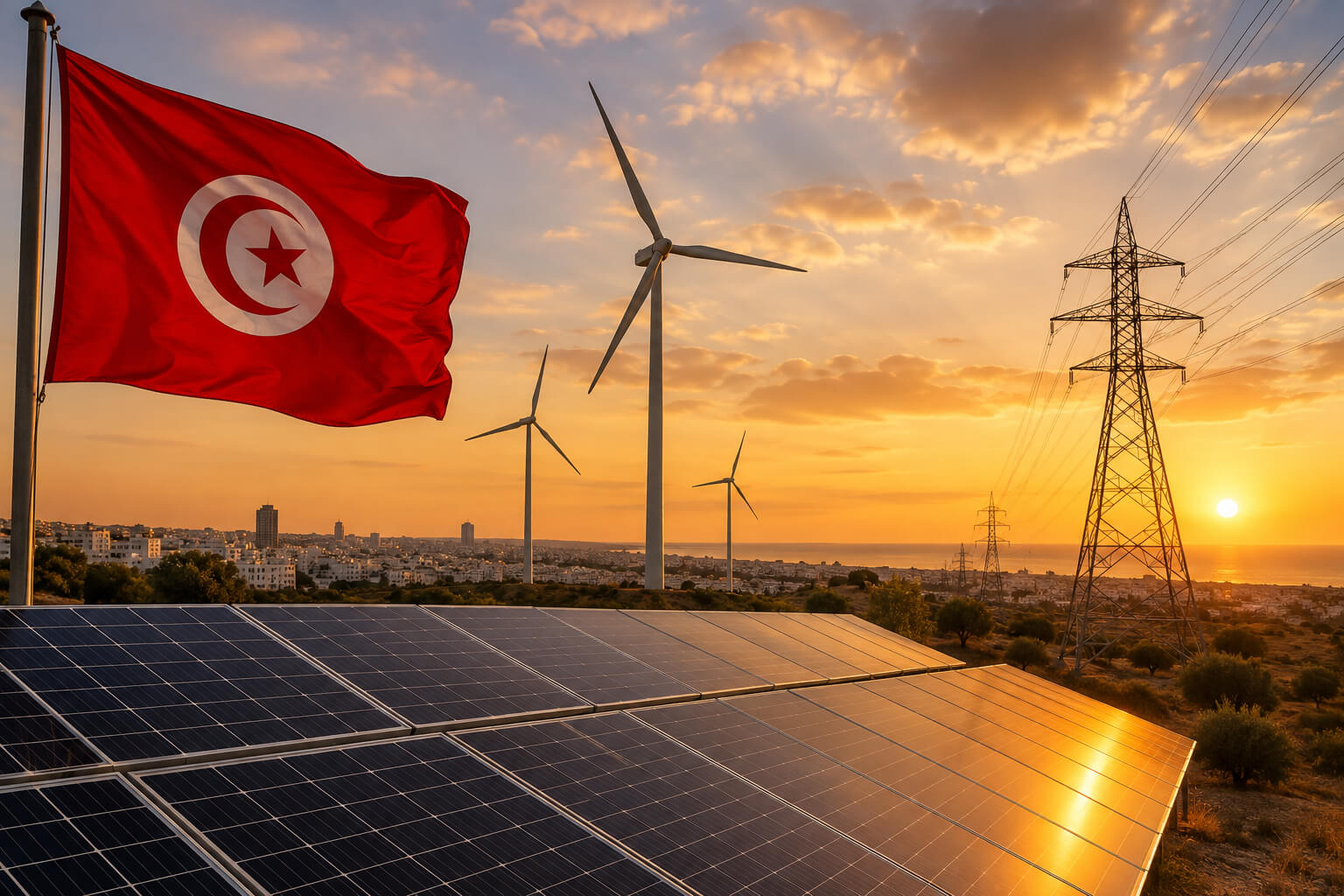
Tunisia is racing to reinforce its electricity network after weeks of power disruptions exposed just how vulnerable the country’s energy system has become.
The immediate response involves larger transformers, stronger high-voltage infrastructure and emergency work on parts of the national grid. The bigger plan goes much further. Tunisia wants more solar and wind power, greater private investment and less dependence on imported natural gas.
That shift has been discussed for years. Record summer demand is now making it harder to delay.
New Transformers Aim to Ease Pressure on Tunisia’s Grid
The Tunisian Electricity and Gas Company, known as STEG, is preparing to bring a new 360-megavolt-ampere transformer into service at the Mornaguia high-voltage substation.
A second transformer with a capacity of 400 MVA is expected to follow.
The equipment, manufactured in China, should increase transmission capacity and give grid operators more flexibility when electricity consumption jumps. Tunisia’s network has been under sustained pressure as extremely hot weather drives heavier use of air-conditioning and cooling systems.
Temperatures exceeded 40°C in several regions during July. Electricity demand rose sharply, forcing STEG to introduce targeted load shedding in some areas to prevent wider system failures.
The transformers will not solve every problem. They should, however, reduce bottlenecks around key sections of the transmission system and lower the risk of overloads during peak demand.
Heatwaves Have Turned Grid Weaknesses Into a National Problem
Tunisia’s electricity difficulties are not simply the result of one unusually hot summer.
The country is dealing with an ageing network, rising consumption and falling domestic hydrocarbon production. Its electricity sector also remains heavily dependent on natural gas, much of it imported.
That leaves Tunisia exposed to international fuel prices, supply interruptions and pressure on foreign currency reserves.
The latest heatwaves pushed those existing weaknesses into view. Power cuts affected households, shops, tourism operators and other businesses that depend on refrigeration, air-conditioning, communications and reliable water pumping.
For companies, even a short outage can mean spoiled goods, damaged equipment or lost customers. Longer disruptions quickly become an economic problem rather than a temporary inconvenience.
Grid reinforcement is therefore becoming part of Tunisia’s climate adaptation strategy. Hotter summers are creating larger demand spikes, while ageing infrastructure has less room to absorb them.
Renewable Energy Is Moving From Policy Goal to Security Issue
Tunisia has strong solar resources and useful wind potential, yet fossil fuels still dominate its electricity mix.
The government now wants renewable energy to play a much larger role. Its wider programme includes utility-scale solar plants, wind farms, self-generation projects and the transmission infrastructure needed to connect them.
This is no longer only about reducing emissions.
More domestically generated renewable electricity could reduce Tunisia’s dependence on imported gas and provide a buffer against volatile international energy markets. It could also lower electricity production costs over time, although new grid capacity and storage will be needed as variable solar and wind generation expands.
Tunisia has been working toward a target of sourcing around 35% of its electricity from renewable energy. Meeting that goal will require faster project approvals, reliable power purchase agreements and enough transmission capacity to move electricity from renewable-rich regions to major population and industrial centres.
Building solar plants without upgrading the network would only create another bottleneck.
International Funding Is Starting to Support Larger Projects
Foreign financing is becoming an important part of Tunisia’s energy transition.
The European Union announced €35.8 million in grant support in January 2026 to help advance renewable generation and electricity infrastructure. The financing includes agreements with the European Bank for Reconstruction and Development and the European Investment Bank.
Initial projects under the programme include a 100 MW solar plant in Sidi Bouzid and a 300 MW solar portfolio in Gafsa. Together, they represent 400 MW of planned capacity.
The grants are intended to make projects more attractive to lenders and investors. Some of the money will support grid connections and transmission infrastructure, not just power generation.
That distinction matters. Across Africa, renewable projects are frequently delayed because national grids cannot absorb or transport the electricity they are designed to produce.
World Bank Programme Targets Deeper Energy Reform
Tunisia is also receiving support through the five-year Tunisia Energy Reliability, Efficiency and Governance Improvement Program.
The World Bank-backed programme carries $430 million in financing, including $30 million in concessional funding from the Climate Investment Funds. Its goals include expanding renewable energy, improving STEG’s operational performance and strengthening management of the electricity sector.
The programme is expected to help Tunisia attract $2.8 billion in private investment and add 2.8 GW of solar and wind capacity by 2028.
World Bank projections suggest the reforms could create more than 30,000 jobs, mostly during construction. They also aim to cut electricity supply costs by 23%, improve STEG’s cost recovery and reduce the burden of energy subsidies on Tunisia’s state budget.
Those targets are ambitious. Tunisia will need regulatory consistency and a financially healthier electricity utility before investors commit at the required scale.
Solar Self-Generation Could Take Pressure Off the Network
Large power plants are only one side of Tunisia’s renewable energy plan.
The government is also encouraging households, factories and commercial facilities to generate electricity for their own use. Rooftop and on-site solar installations could reduce demand on the national system during daylight hours, particularly when air-conditioning loads are high.
For industrial users, self-generation can offer more predictable energy costs and some protection against grid interruptions.
The challenge is making the process simple enough to attract widespread participation. Complicated approvals, unclear compensation arrangements or limited access to finance can slow small-scale installations even when the economics make sense.
A faster rollout of distributed solar would not replace major grid projects. It could buy the system breathing room.
Green Hydrogen Remains Part of Tunisia’s Longer-Term Strategy
Tunisia also sees green hydrogen as a possible export industry.
The country’s solar potential and proximity to Europe make it an attractive location for projects designed to supply low-carbon hydrogen to European industrial markets. Several international partnerships are already examining production facilities, pipelines and export infrastructure.
The opportunity is large, but so are the requirements.
Green hydrogen production needs enormous amounts of renewable electricity. It also requires water, electrolysers, storage, transport systems and long-term buyers. Tunisia cannot build a serious hydrogen export sector without first expanding its domestic renewable capacity and modernising the electricity grid.
There is another question, too: how much clean power should be exported while local communities and businesses continue dealing with unreliable supply?
That debate will become harder to avoid as projects move beyond announcements.
Tunisia’s Energy Transition Now Depends on Delivery
Tunisia has no shortage of targets, partnerships or renewable energy potential.
The pressure is now on execution.
New transformers can provide near-term relief. Solar and wind projects can reduce imported fuel dependence. International funding can help move developments from planning documents into construction.
None of those pieces works properly alone.
Tunisia needs generation, transmission, distribution and sector reform to move together. The prolonged electricity crisis has shown what happens when investment falls behind demand. Another hot summer could expose the same weaknesses again unless the upgrades now being announced reach the grid quickly.