
Qatar Museums has reached a new sustainability milestone, and this one goes beyond office recycling campaigns or vague green pledges.
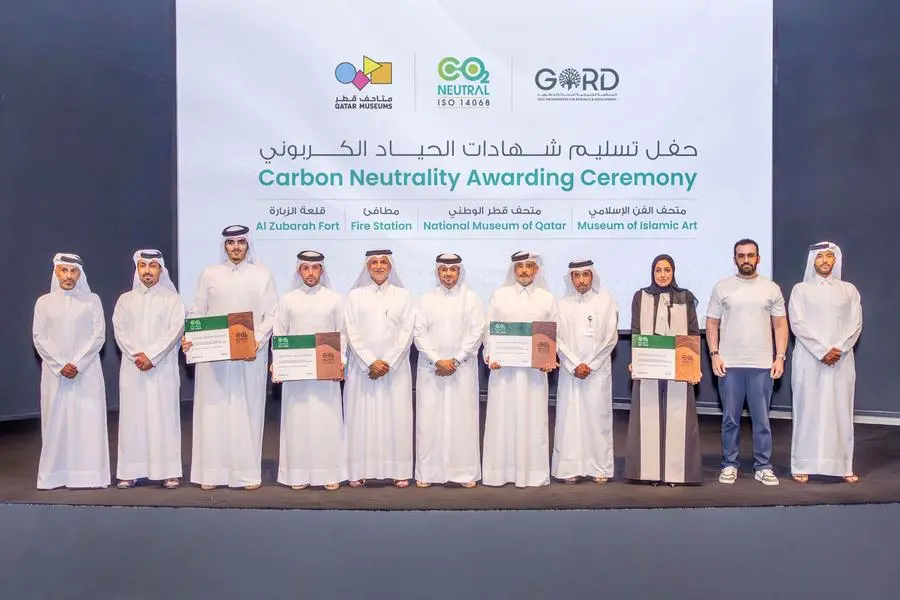
Four of its best-known cultural and heritage sites have received Carbon Neutrality Certification for their operations and services. The certified sites are the National Museum of Qatar, the Museum of Islamic Art, Fire Station, and Al Zubarah Fort. The certification covers the 2025 reporting period and recognises the sites for achieving net-zero carbon emissions.
For a museum network, that is not a small line item. These are large public spaces. They host visitors, exhibitions, events, collections, cooling systems, lighting, maintenance work, transport activity, and all the hidden emissions that come with keeping cultural landmarks open.
Four Landmark Sites Now Certified Carbon Neutral
The certification applies to four very different Qatar Museums locations.
The National Museum of Qatar is one of the country’s most recognisable modern cultural buildings. The Museum of Islamic Art is a major regional institution. Fire Station supports contemporary art and creative programming. Al Zubarah Fort, meanwhile, brings heritage and conservation into the same sustainability conversation.
That mix matters.
Carbon neutrality in a museum is one thing. Carbon neutrality across modern architecture, public programming, creative space, and a historic heritage site feels more ambitious. It shows that sustainability work in culture does not only belong to new buildings with shiny technology. Older and heritage-linked sites also have to be part of the shift.
What the Certification Actually Means
According to the announcement, Qatar Museums worked with the Gulf Organisation for Research and Development, known as GORD, to support the carbon management process. The certification followed emissions calculations, documentation, and third-party verification.
A carbon offsetting strategy was also developed to address remaining emissions through carbon credits from internationally recognised crediting programmes. The full documentation and emissions calculations were submitted to Earthood Services Limited for independent verification before the certification was issued.
That detail is important because “carbon neutral” can easily become a soft phrase when nobody explains what sits behind it.
Here, the process appears to include measurement, reporting, offsetting, and outside review. Not perfect magic. Not emissions disappearing overnight. More like a structured attempt to account for the carbon footprint of operating major cultural facilities and then neutralise it through recognised methods.
Why This Matters for Sustainable Culture
Museums are usually seen as guardians of memory, art, identity, and heritage. But they also consume energy. A lot of it.
Air conditioning, preservation systems, lighting, digital installations, visitor services, and event operations all carry environmental costs. In a hot climate like Qatar’s, the sustainability challenge becomes even more serious because comfort and conservation often depend on energy-intensive systems.
That is why this certification is worth watching. It places cultural institutions inside the wider climate conversation, not outside it.
A museum cannot talk about the future while ignoring the environmental cost of protecting the past. That sounds harsh, but it is true.
Qatar’s Heritage Sector Is Moving Into Climate Accountability
This move also fits into Qatar’s broader sustainability direction under Qatar National Vision 2030, which includes responsible environmental stewardship and innovation as part of national development. Qatar Museums said it plans to keep advancing sustainable practices across its institutions with partners such as GORD. The interesting part is how this could influence other cultural organisations in the Gulf.
Many countries in the region are investing heavily in museums, heritage districts, cultural tourism, creative industries, and large-scale public venues. As those sectors grow, sustainability cannot stay as an afterthought attached to construction brochures. It has to show up in operations too. Qatar Museums may now have a useful example for that.
A Strong Signal, But the Hard Work Continues
Carbon neutrality certification is a milestone. It is not the finish line.
The real test will be whether Qatar Museums can reduce direct emissions further, improve energy efficiency, expand sustainable procurement, keep visitor operations cleaner, and make carbon accounting part of normal cultural management.
Still, the direction is clear enough.
Sustainability is no longer only for energy companies, transport firms, and real estate developers. It is moving into museums, galleries, forts, archives, and cultural spaces. In Qatar, that shift has now reached four landmark sites at once.