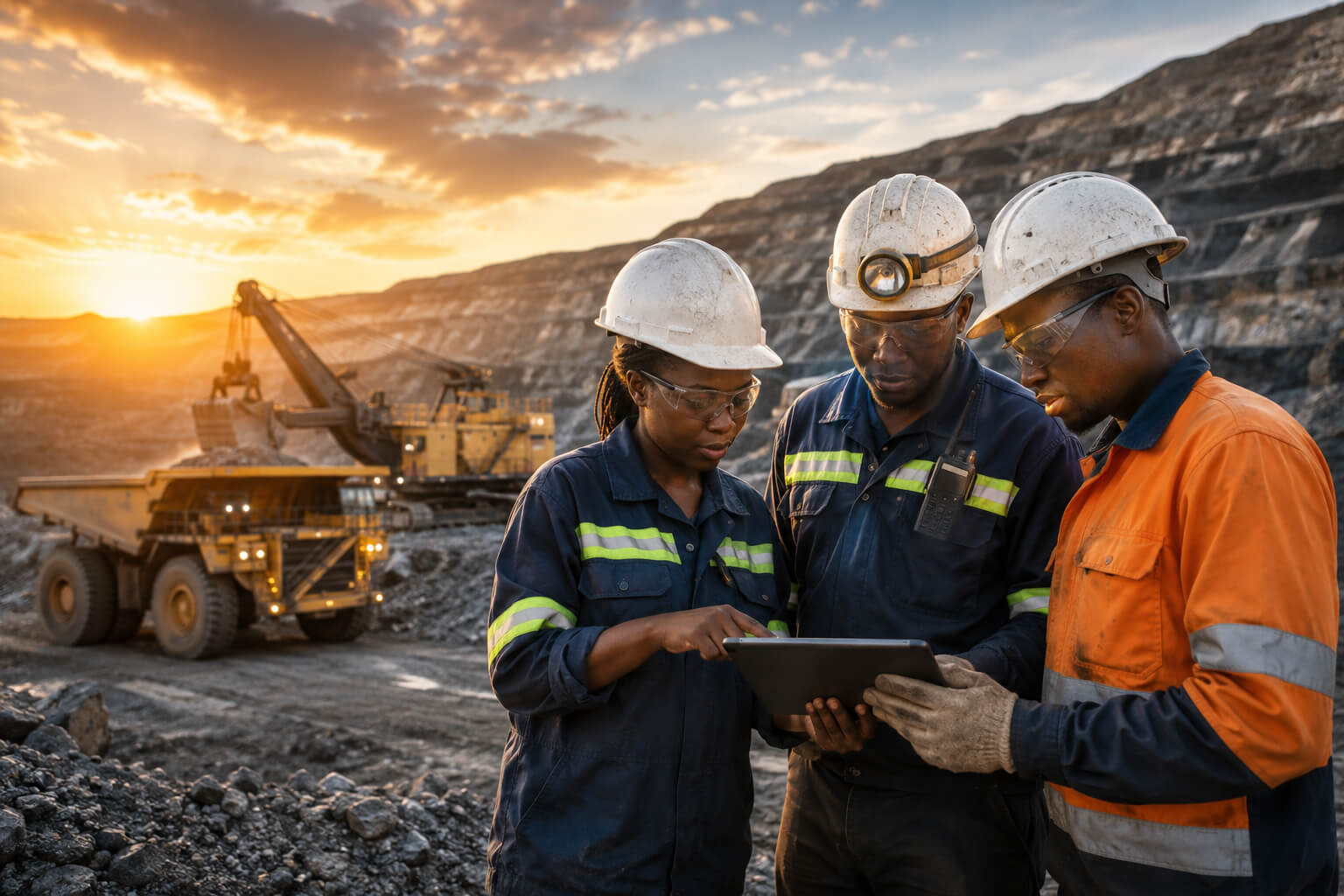
Walk around any mining conference in Johannesburg these days and you’ll hear the same worry repeated in different accents: where are the next engineers going to come from? Southern Africa mining skills development has quietly become the industry’s biggest talking point, and this year it’s showing up in a very practical way — free technical workshops, seminar theatres, and career hubs built right into the region’s flagship mining exhibition.
Four organisations are driving it. The Southern African Institute of Mining and Metallurgy (SAIMM), the Society for Automation, Instrumentation, Mechatronics and Computer Engineering (SAIMC), the South African Institution of Mechanical Engineering (SAIMechE), and Women in Mining South Africa (WiMSA) have all expanded their educational programming alongside Electra Mining Africa 2026. The goal isn’t subtle: get engineers, students, and mining companies talking to each other about the problems that actually keep operations running — or shut them down.
Why Free Technical Sessions Matter More Than They Sound
Here’s the thing about industry knowledge — it usually stays locked inside individual companies. A mine in Limpopo solves a predictive maintenance problem, and unless someone writes a paper or gives a talk, that fix never travels to a similar operation three provinces over. That’s the gap these free sessions are meant to close.
Organisers built the programme around direct access — no registration fees, no gatekeeping — so professionals, students, and engineers can sit in on presentations covering best practice, new technology, and operational problem-solving. It sounds like a small thing. It isn’t. Productivity, safety, and sustainability challenges don’t get solved in boardrooms; they get solved when someone who fixed a problem last month tells someone who’s about to hit the same wall.
What’s Actually Happening on the Ground
The SAIMM Seminar Theatre is carrying a lot of the weight here, with sessions on operational excellence and engineering practice that let participants swap real experience rather than sit through another slide deck of theory. Meanwhile, automation is eating the agenda — SAIMC’s workshops dig into instrumentation and advanced engineering systems, the kind of tech that’s turning predictive maintenance, remote monitoring, and data analytics from nice-to-haves into standard operating procedure. Mines that adopt this stuff aren’t just cutting costs. They’re cutting the accident reports too.
Mechanical engineering hasn’t been left out. SAIMechE is running a Skills and Career Hub throughout the event, putting students and early-career engineers in the same room as the companies trying to hire them. That matters because skills shortages aren’t a talking point in African mining — they’re a structural problem. Technology keeps getting more sophisticated, and the pipeline of people who can actually run it hasn’t kept pace. Clearer pathways into the profession are becoming less of a nice idea and more of a necessity.
Women in Mining Get a Seat, Not Just a Mention
WiMSA is hosting a half-day workshop focused squarely on getting more women into technical, operational, and leadership roles across the mining value chain. Representation has improved over the past twenty years — nobody’s pretending otherwise — but women are still thin on the ground in the roles that actually run operations and make decisions. Mentorship, professional networks, leadership development: these aren’t just HR checkboxes anymore. They’re part of how the industry plans to stay competitive.
Where ESG Actually Meets Reality
Investors used to look at a mining company’s emissions numbers and call it a day. Not anymore. Human capital development, occupational safety, diversity, institutional resilience — these now sit right alongside carbon metrics on the checklist. And the connection isn’t abstract: a workforce that’s actually trained runs safer operations, which strengthens governance, which makes it easier to implement whatever sustainability standard comes down the pipe next. Skills development isn’t separate from ESG. It’s one of the load-bearing walls.
Africa’s Minerals, Africa’s Moment
There’s a bigger backdrop to all this. The world needs critical minerals — for batteries, for renewables, for the whole electrification push — and African jurisdictions are sitting on a lot of what’s needed. But having the minerals in the ground isn’t the same as being able to compete for the investment that extracts them responsibly. That takes a workforce that can run sophisticated technology while meeting environmental and governance standards that keep tightening every year. Resources alone won’t cut it anymore.
The Institutions Doing the Quiet Work
SAIMM, SAIMC, and SAIMechE aren’t just running seminars for the sake of it. They’re building the institutional scaffolding — professional accreditation, independent technical platforms, forums for engineers to actually exchange knowledge — that lets the industry respond when regulations shift or a new technology disrupts the way things have always been done. It’s unglamorous work. It’s also the kind of work that determines whether a sector survives the next decade or just muddles through it.
The Bottom Line
Equipment gets old. Infrastructure needs replacing. But a workforce that knows what it’s doing? That compounds. Southern Africa mining skills development is becoming just as central to the industry’s future as the next piece of capital equipment — arguably more so, since machines don’t train the people who’ll eventually replace them. As sustainability keeps folding itself into how mining companies are judged and valued, the sector’s long game depends on skilled people, adopted technology, and institutions sturdy enough to hold it all together.
Sources
- Southern African mining industry expands skills and sustainability agenda through technical knowledge-sharing platforms — African Sustainability Matters
- SAIMM Seminar Theatre — Electra Mining Africa
- Southern African Institute of Mining and Metallurgy (SAIMM)
- Society for Automation, Instrumentation, Mechatronics and Computer Engineering (SAIMC)
- South African Institution of Mechanical Engineering (SAIMechE)
- Women in Mining South Africa (WiMSA)
- Sustainable solutions driving industry transformation at Electra Mining Africa 2026 — Engineering News