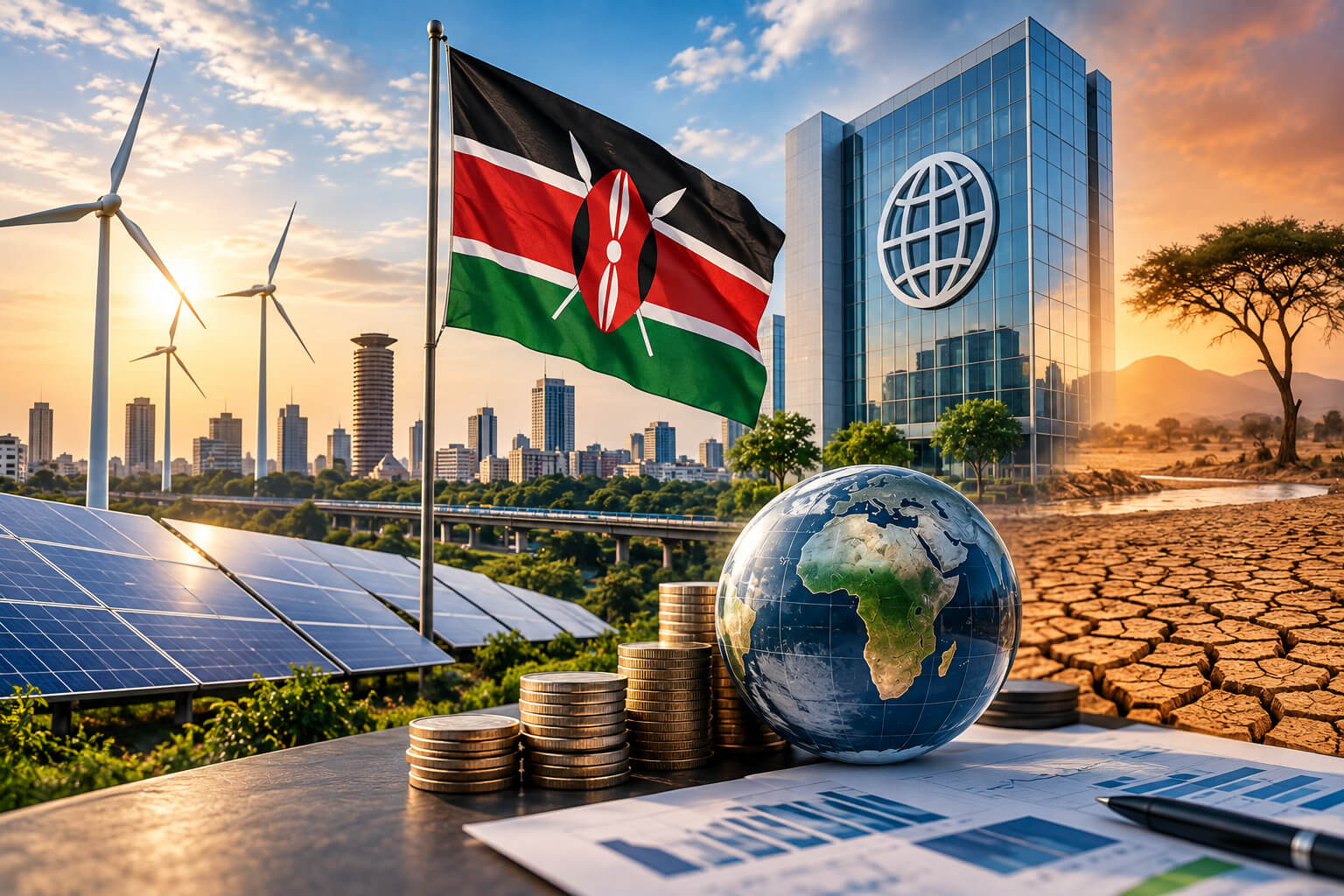
Kenya is preparing to access roughly $400 million in emergency World Bank financing as climate threats, regional health risks and volatile energy prices create fresh pressure on the economy.
The proposed funding would give Nairobi a faster financial buffer if conditions worsen. Rather than operating as a conventional new loan, the arrangement would allow Kenya to redirect part of its existing undisbursed World Bank financing toward qualifying emergencies.
For Kenya, the timing is important. The country is simultaneously watching climate disruption, regional disease threats and unstable global oil prices. Those risks are different, but they can quickly overlap and place additional strain on public finances.
Kenya Turns to the World Bank Rapid Response Option
The proposed financing would come through the World Bank’s Rapid Response Option, a crisis-financing mechanism designed to help eligible governments access already committed funds more quickly during an emergency. Under the structure, governments can redirect a portion of undisbursed financing from eligible World Bank projects when a qualifying crisis occurs. That means Kenya is not simply seeking another standalone $400 million loan. It is preparing a mechanism that would allow existing resources to move faster when circumstances demand it.
The World Bank has been working with Kenyan authorities to establish the framework needed to activate this financing when an eligible emergency occurs. The final amount available will depend on the level of undisbursed financing that can be redirected once the arrangement is completed.
El Niño Raises the Stakes for Kenya
Climate risk is a major part of Kenya’s emergency planning. Strong El Niño conditions can bring disruptive rainfall patterns, flooding, agricultural losses, damaged roads and pressure on public infrastructure. These effects can be expensive, particularly in areas that depend heavily on agriculture and rural transport networks.
Kenya has dealt with major El Niño-related disruption before. Severe rainfall events can force authorities to spend quickly on repairs, emergency shelter, food assistance and public services. Having financing available before the damage becomes severe gives the government more flexibility to respond instead of waiting for a separate funding process to begin after a disaster.
Regional Health Risks Add Another Layer of Pressure
Public health is another concern behind Kenya’s emergency financing preparations. Regional disease outbreaks can increase pressure on surveillance systems, border controls, laboratories and hospitals even when Kenya does not experience a major domestic outbreak.
As a major transport and commercial hub in East Africa, Kenya remains exposed to health threats moving across borders. Stronger emergency financing could support testing, monitoring, protective equipment and rapid-response capacity if a serious outbreak affects the country or the wider region.
Kenya is also working with the World Bank on broader health-system resilience. Existing and planned investments are aimed at strengthening emergency preparedness, improving healthcare delivery and giving the country more capacity to respond when public-health threats escalate.
Higher Oil Prices Expose Kenya’s Energy Vulnerability
Energy prices create a separate but equally important risk. Kenya depends heavily on imported petroleum products, which leaves the country exposed when global oil prices rise sharply.
Higher fuel prices affect more than motorists. Transport costs increase, businesses face higher operating expenses and inflation can spread across food, logistics and manufacturing. If oil prices remain elevated for an extended period, the government may also come under pressure to introduce measures that soften the impact on households and businesses.
The push for rapid-response financing reflects this wider concern. A mechanism originally designed to provide protection against sudden shocks can also become useful when climate, health and energy pressures converge at the same time.
Kenya Has Limited Room to Absorb Multiple Shocks
The challenge becomes more serious when several risks develop together. Extreme weather can damage crops and infrastructure. Higher oil prices can increase transportation and production costs. A public-health emergency can force the government to increase spending while also weakening travel, commerce and local economic activity.
Kenya must manage those pressures while operating within tight fiscal conditions. Debt repayments and limited budget flexibility leave less room to absorb unexpected costs. Rapid access to World Bank financing can help, but it does not remove the broader question of how much financial space the government has when repeated shocks occur.
The World Bank remains one of Kenya’s most important development partners, with financing spread across transport, water, agriculture, health, education, energy and climate resilience. That existing portfolio gives Kenya a potentially larger pool of resources that can be redirected if emergency conditions justify it.
Emergency Financing Is a Buffer, Not a Long-Term Fix
The proposed $400 million facility could give Kenya valuable breathing room during a crisis, but it cannot solve the country’s deeper structural vulnerabilities. Emergency financing can help repair damaged infrastructure, strengthen health responses or reduce the immediate economic effects of an energy shock. It does not remove Kenya’s exposure to climate-sensitive agriculture, imported fuel or recurring fiscal pressure.
Long-term resilience requires investment before emergencies occur. Climate-resilient infrastructure, diversified energy supplies, stronger public-health systems and improved disaster-preparedness frameworks can reduce the scale of future losses and lower the amount of emergency financing needed when shocks arrive.
Kenya Builds a Financial Safety Net for an Uncertain Future
Kenya and the World Bank are working to finalize a contingency framework that would allow the country to access emergency financing more quickly when a qualifying event occurs. If completed as expected, the arrangement would give the government a faster way to redirect existing resources toward urgent national needs.
That speed matters. Climate events, disease outbreaks and energy-price shocks do not always provide months of warning. A funding mechanism that can respond quickly gives Kenya more room to protect infrastructure, support public services and reduce the economic damage caused by sudden disruptions.
The bigger test will be how effectively the country uses that financing when a real emergency occurs. The value of the facility will not only depend on the size of the available funds, but also on how quickly those resources reach vulnerable communities, public institutions and critical sectors of the economy.
Sources
African Sustainability Matters — Kenya seeks $400 million World Bank emergency financing as climate, health and energy risks converge
https://africasustainabilitymatters.com/kenya-seeks-400-million-world-bank-emergency-financing-as-climate-health-and-energy-risks-converge/
World Bank — Kenya country overview and development portfolio
https://www.worldbank.org/ext/en/country/kenya
Kenya Ministry of Health — Kenya and World Bank health investments
https://health.go.ke/