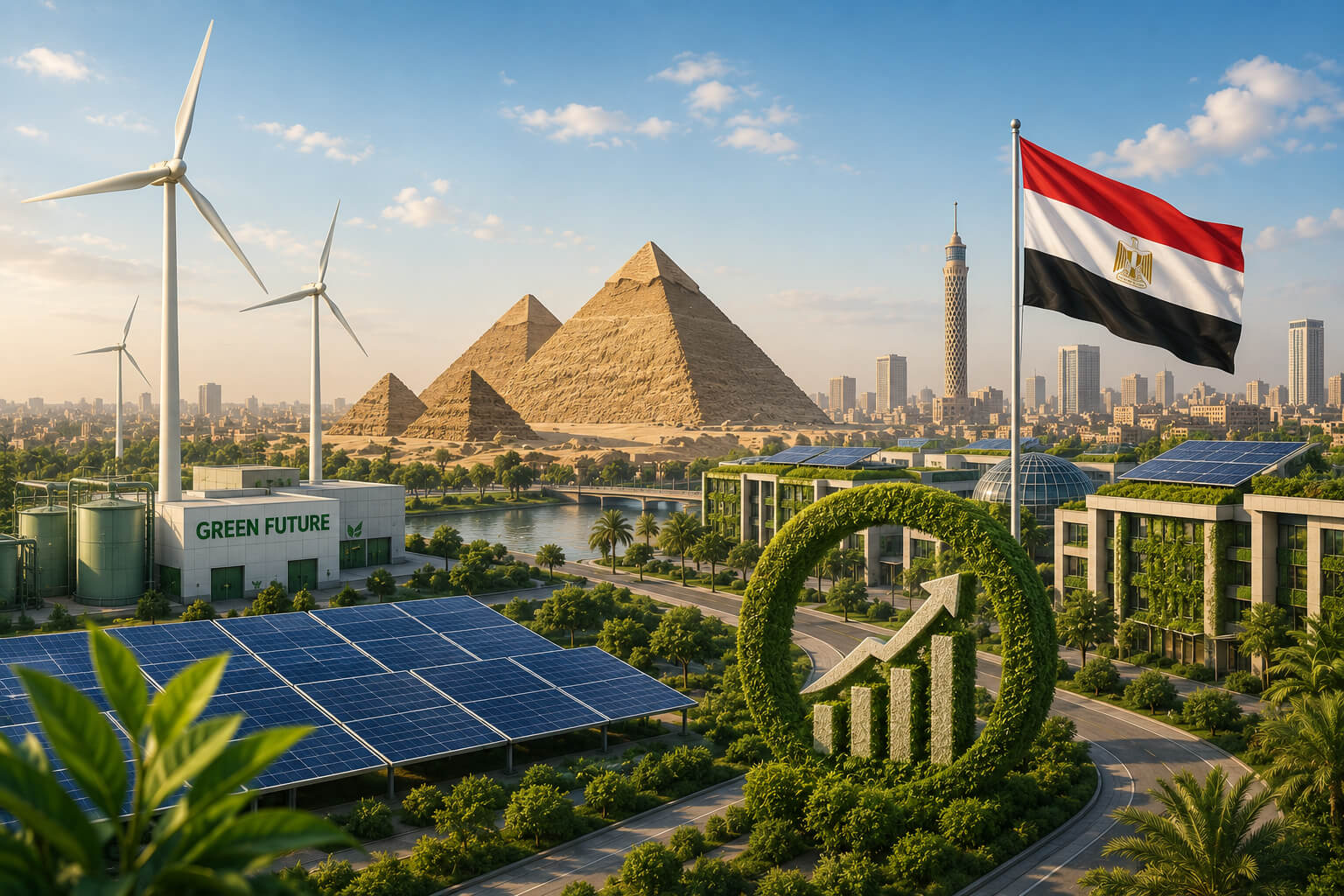
Egypt is putting more public money behind climate-focused development, and the scale is becoming difficult to ignore.
During the 2024/25 fiscal year, the country implemented approximately EGP 215.5 billion (around $4.26 billion) in green public investments. Those projects stretched across transport, clean energy, agriculture, urban development, environmental protection, and climate adaptation. It is another sign that sustainability is becoming part of how Egypt plans long-term economic growth rather than a separate environmental initiative.
Transport Continues to Dominate Green Investment
One sector absorbed the majority of the funding.
Green transportation represented 71.5% of total green public investments. The government’s portfolio includes major infrastructure such as the Cairo Metro and the country’s expanding high-speed electric rail network. Large transport projects often receive criticism for their cost, but in Egypt’s case they are also being positioned as long-term climate investments that could reduce emissions from urban mobility while supporting economic activity.
After transport, funding spread across several other priorities. The presidential Decent Life initiative accounted for 10.5% of investments, followed by sustainable urban development at 8%, environmental improvement projects at 4.5%, agriculture and irrigation at 3%, clean energy at 1.5%, with additional investment flowing into the communications sector.
Most Funding Targets Climate Mitigation
Not every environmental project serves the same purpose.
According to the Ministry of Planning and Economic Development, 87% of green public investments during the fiscal year focused on climate mitigation. The remaining 13% supported adaptation projects designed to help communities and infrastructure cope with climate impacts.
That distinction matters. Mitigation aims to lower greenhouse gas emissions, while adaptation focuses on making economies more resilient against rising temperatures, flooding, water shortages, and other climate-related risks. Egypt appears to be investing in both, although mitigation currently receives the larger share.
Water, Waste and Renewable Energy Remain Priorities
The investment portfolio extends well beyond transportation.
Projects completed during the fiscal year included renewable energy facilities, integrated solid waste management systems, hazardous medical waste treatment plants, wastewater treatment facilities, desalination projects, irrigation modernization, canal rehabilitation, coastal protection works, and soil improvement initiatives.
Many of these investments serve multiple purposes at once. Modern irrigation conserves water while improving agricultural productivity. Waste management reduces pollution and strengthens public health. Coastal protection prepares vulnerable regions for rising sea levels and increasingly severe weather events.
Egypt Wants Green Spending to Keep Rising
The government is not treating FY2024/25 as the finish line.
Planning Minister Ahmed Rostom said Egypt intends to increase green public investment from 15% of total public investment in FY2020/21 to around 60% during FY2026/27. Officials also continue integrating environmental sustainability standards into national investment planning as part of Egypt Vision 2030 and the National Climate Change Strategy.
If those targets are achieved, green spending will become a central feature of Egypt’s development model rather than a supporting policy.
Why It Matters
Governments around the world continue debating how quickly to finance climate action. Egypt is already shifting a growing share of public investment toward projects that combine infrastructure development with environmental objectives.
The challenge now is less about announcing ambitious plans and more about maintaining consistent implementation. Building rail systems, modernizing water infrastructure, expanding renewable energy, and strengthening climate resilience require sustained investment over many years.
Egypt’s latest figures suggest that process is already underway. Whether it delivers measurable environmental and economic returns will become clearer as future investment cycles unfold.