
Adding more solar power sounds simple until the electricity grid starts behaving differently.
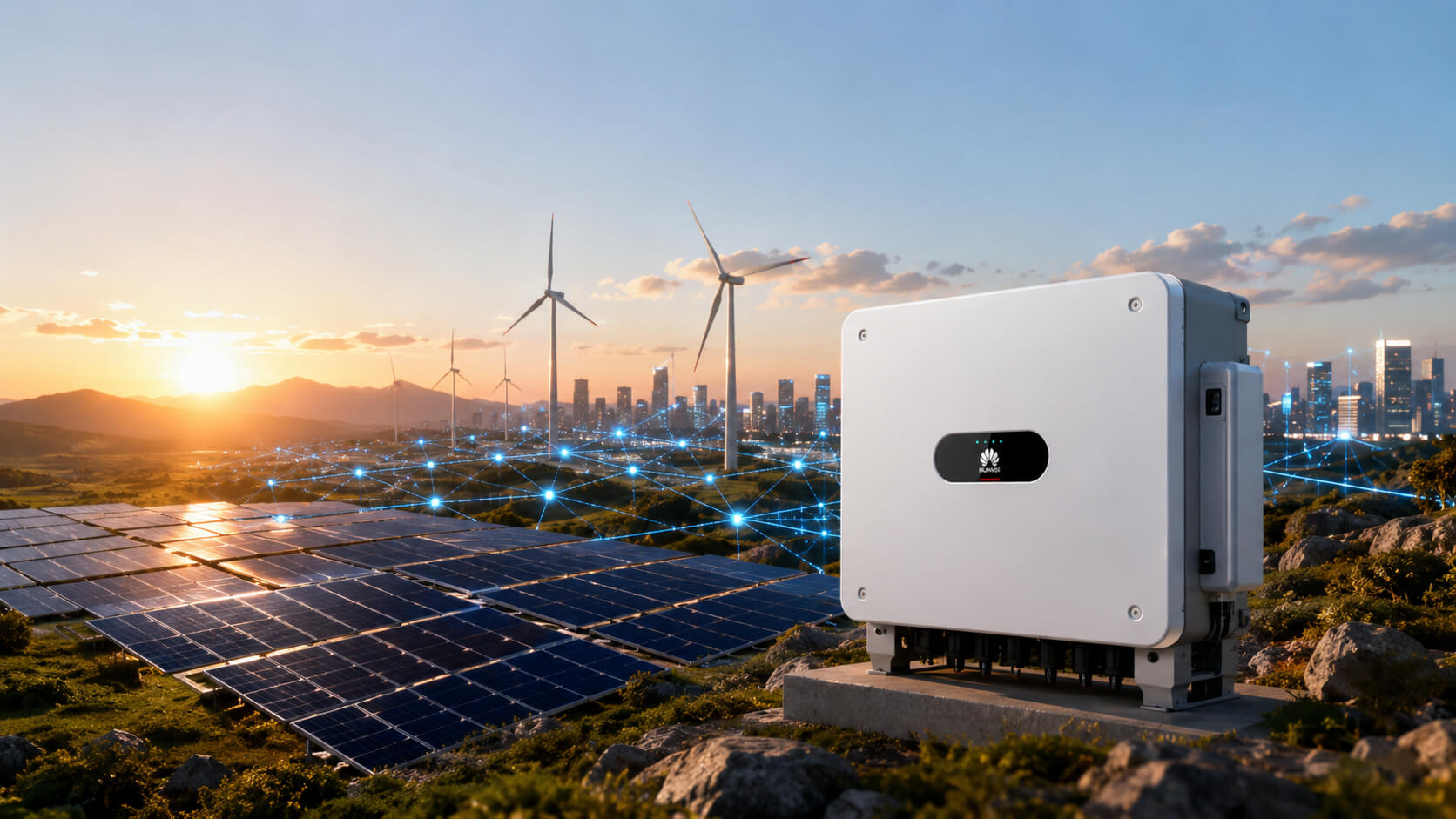
That is the issue Huawei Digital Power wants to address with FusionSolar 9.0, its next-generation Smart PV solution launched for the Middle East and Central Asia during a technical summit in Dubai.
The system is designed for large solar projects, where generating more electricity is no longer the only concern. Grid operators also need those projects to remain stable during sudden changes in demand, voltage disturbances, equipment faults, and the natural fluctuations that come with renewable energy.
Huawei is betting that solar plants should do more than send power into the network. They should actively help hold that network together.
Huawei Brings FusionSolar 9.0 to Dubai
Huawei Digital Power introduced FusionSolar 9.0 during the FusionSolar Technical Innovation Summit held in Dubai on July 15.
The gathering brought together utilities, policymakers, engineering firms, developers, consultants, technology specialists, and renewable energy partners from across the Middle East and Central Asia. Much of the discussion focused on a question that is becoming harder to avoid: how can countries add large volumes of solar power without creating new stability problems for their electricity systems?
Renewable capacity is growing quickly across the region. That is good news for emissions targets and energy diversification, but it also changes how national grids operate. Traditional power stations naturally provide certain stabilizing functions. Solar installations connected through inverters need more advanced controls to provide similar support.
FusionSolar 9.0 has been built around that gap.
Grid-Forming Technology Is the Bigger Story
The phrase “grid-forming” can sound like another piece of technical marketing. It matters more than the name suggests.
Most conventional solar inverters follow the voltage and frequency already established by the grid. Grid-forming technology can establish and regulate those conditions more actively, allowing renewable energy equipment to behave more like a stabilizing power source.
That becomes increasingly important as wind and solar account for a larger share of electricity generation. Fewer conventional generators may be running at a given time, leaving the system with less natural inertia and fewer resources capable of responding instantly when something goes wrong.
Huawei says FusionSolar 9.0 introduces grid-forming capabilities directly into its smart string inverter architecture. The goal is to help solar plants manage transient fluctuations, withstand disturbances, and continue supporting the network under weaker grid conditions.
It is not the glamorous side of the clean energy transition. Still, it may be one of the parts that determines whether large-scale renewable expansion works reliably.
FusionSolar 9.0 Is Built for Utility-Scale Solar
FusionSolar 9.0 combines new string inverter technology with digital plant management, grid-support functions, and updated reliability features.
Huawei is positioning the platform primarily for utility-scale developments and large commercial and industrial solar projects. Its architecture includes the SUN2000-506K high-power smart string inverter and new smart transformer station options designed for increasingly large photovoltaic arrays.
The system uses a 1,000-volt AC architecture and can support an array size of up to 11 megawatts, according to Huawei. The company says the larger configuration can reduce balance-of-system requirements while allowing developers to build higher-capacity solar blocks.
That may sound like an engineering detail. For developers, fewer components, simpler layouts, and lower infrastructure costs can make a meaningful difference across a project expected to operate for decades.
Solar Plants Are Becoming Active Grid Assets
For years, the solar industry concentrated heavily on efficiency. More electricity from each panel. Better inverters. Lower project costs. Faster construction.
Those priorities have not disappeared, but the conversation is shifting.
A modern solar plant may now be expected to regulate voltage, respond to grid instructions, ride through faults, provide reactive power, and continue operating during disturbances. In other words, it is being asked to participate in the power system rather than simply connect to it.
FusionSolar 9.0 reflects that change. Huawei describes the solution as a way to turn photovoltaic projects into intelligent, grid-supporting assets instead of passive sources of intermittent generation.
This does not eliminate the need for battery storage, stronger transmission networks, or conventional backup capacity. Grid-forming solar is one part of a much larger system. It could, however, give grid operators another tool as renewable penetration rises.
AI Moves Into Solar Plant Operations
Huawei is also putting more artificial intelligence into the management side of FusionSolar 9.0.
The platform includes AI-supported power forecasting, construction monitoring, plant supervision, and operations and maintenance tools. Huawei says these functions can identify problems earlier, improve forecasting accuracy, and reduce the amount of manual work required to manage large sites.
A utility-scale solar development can contain thousands of panels, cables, connectors, strings, and monitoring points. Even a small fault can be difficult to locate without detailed plant-level data.
Smarter diagnostics may help operators narrow down failures before dispatching maintenance teams. Better generation forecasts could also make it easier for utilities to plan around changes in sunlight and coordinate solar output with other power sources.
The promise is familiar: more automation, fewer surprises. Whether those gains appear consistently in real projects will depend on deployment, local grid requirements, and how well the systems are maintained.
Safety and Reliability Remain Part of the Pitch
FusionSolar 9.0 also includes upgraded protection and cooling features aimed at improving long-term reliability.
Huawei highlights connector-level temperature detection, string-level disconnection, insulation diagnosis, and automated protection against certain operating faults. Its cooling system is designed to cope with demanding environments, including high temperatures and dusty conditions that are common across parts of the Middle East.
That regional context matters. Solar technology may perform well in controlled tests but still face punishing conditions once installed in the desert. Heat, dust, sand, and repeated thermal stress can affect equipment performance and shorten component life.
Huawei is presenting the platform as a lifecycle solution rather than a short-term efficiency upgrade. Lower maintenance requirements and longer equipment life could be just as important as slightly higher output, particularly for large projects built under long power-purchase agreements.
Independent Assessments Add Weight to Huawei’s Claims
Huawei used the Dubai summit to present technical assessments related to its grid-forming and inverter technologies.
Representatives from energy consultancy Go2Power and assurance and risk management company DNV discussed evaluations covering grid-forming capability, long-term performance, and the reliability of string inverter systems.
Independent testing is especially important for grid-support technology. Developers and utilities need more than product claims before allowing advanced inverter controls to influence the behavior of large power systems.
Huawei also pointed to simulation work conducted in Saudi Arabia and validation testing completed in Germany. Those assessments do not automatically guarantee identical results in every market, but they give utilities and project developers more technical material to examine before deployment.
The Middle East’s Energy Transition Is Entering a Harder Phase
The first stage of renewable growth was largely about installing capacity. Build the solar park. Connect it. Count the megawatts.
The next stage is messier.
Countries now have to integrate renewable energy into grids that were built around large, centralized fossil-fuel power stations. Electricity demand is rising at the same time, pushed by population growth, industrial expansion, cooling needs, electric transport, desalination, and data centers.
Solar can provide enormous volumes of low-carbon electricity across the Middle East, but only when the surrounding grid can absorb and manage it.
Huawei FusionSolar 9.0 arrives at that point in the transition. Its launch is less about another inverter entering the market and more about the changing role of renewable power plants.
Clean energy projects are being asked to generate electricity, communicate with operators, react to disturbances, forecast production, protect themselves, and stabilize the grid.
Quite a job description for a solar farm.
Huawei FusionSolar 9.0 Could Help Support Larger Renewable Projects
FusionSolar 9.0 will not solve every grid challenge facing the Middle East and Central Asia. Transmission upgrades, energy storage, market reform, regional interconnections, and flexible generation will remain necessary.
Still, grid-forming solar technology could make it easier to operate power systems with much higher levels of renewable energy.
Huawei’s launch in Dubai shows where the market is heading. Solar projects will increasingly be judged not only by how cheaply they produce electricity, but also by how well they behave when the grid is under pressure.
The panels still matter.
What happens behind them now matters almost as much.
Sources
ZAWYA: Huawei unveils grid-forming FusionSolar 9.0 in Dubai
Huawei FusionSolar 9.0 Utility Smart PV Solution: Official solution page
Huawei Digital Power FusionSolar 9.0 Announcement: High-renewable grid solar announcement
DNV Solar Certification Services: Solar type certification