
Senegal is getting another major infrastructure boost, but this is not simply a road-building announcement.
The World Bank has approved $140 million in additional financing to improve transport links across Senegal’s northern and central agricultural regions. The funding is meant to connect rural producers with markets, processing facilities and essential public services while making key roads more resistant to climate-related damage.
Approved on July 14, 2026, the financing includes €119.6 million provided through the International Development Association, the World Bank’s concessional financing arm for lower-income countries. Senegal’s government will contribute another $2 million.
That brings the total value of the wider connectivity project to $470.8 million. Around 570,000 people are expected to benefit by the time the programme is completed.
Senegal’s Rural Roads Are Part of a Much Bigger Economic Plan
The project is officially known as the Enhancing Connectivity in the Northern and Central Agricultural Production Areas of Senegal Project.
A long name, yes. The purpose is easier to understand.
Farmers and livestock producers need dependable routes to move crops, animals and other goods from production areas to towns, regional markets and processing centres. Poor roads make every part of that journey more expensive. Travel takes longer. Vehicles need more repairs. Perishable products may arrive late or not arrive in usable condition at all.
The new financing will extend road improvements into two important economic corridors: Koussanar–Koumpentoum and Tambacounda–Dianké Makha. Agriculture and livestock are major sources of employment and income in both areas.
The World Bank expects better transport access to open more opportunities for rural businesses, women entrepreneurs, younger workers and others involved in agricultural value chains.
More Than 270 Kilometres of Roads and Rural Tracks Are Planned
The physical scale of the next phase is substantial.
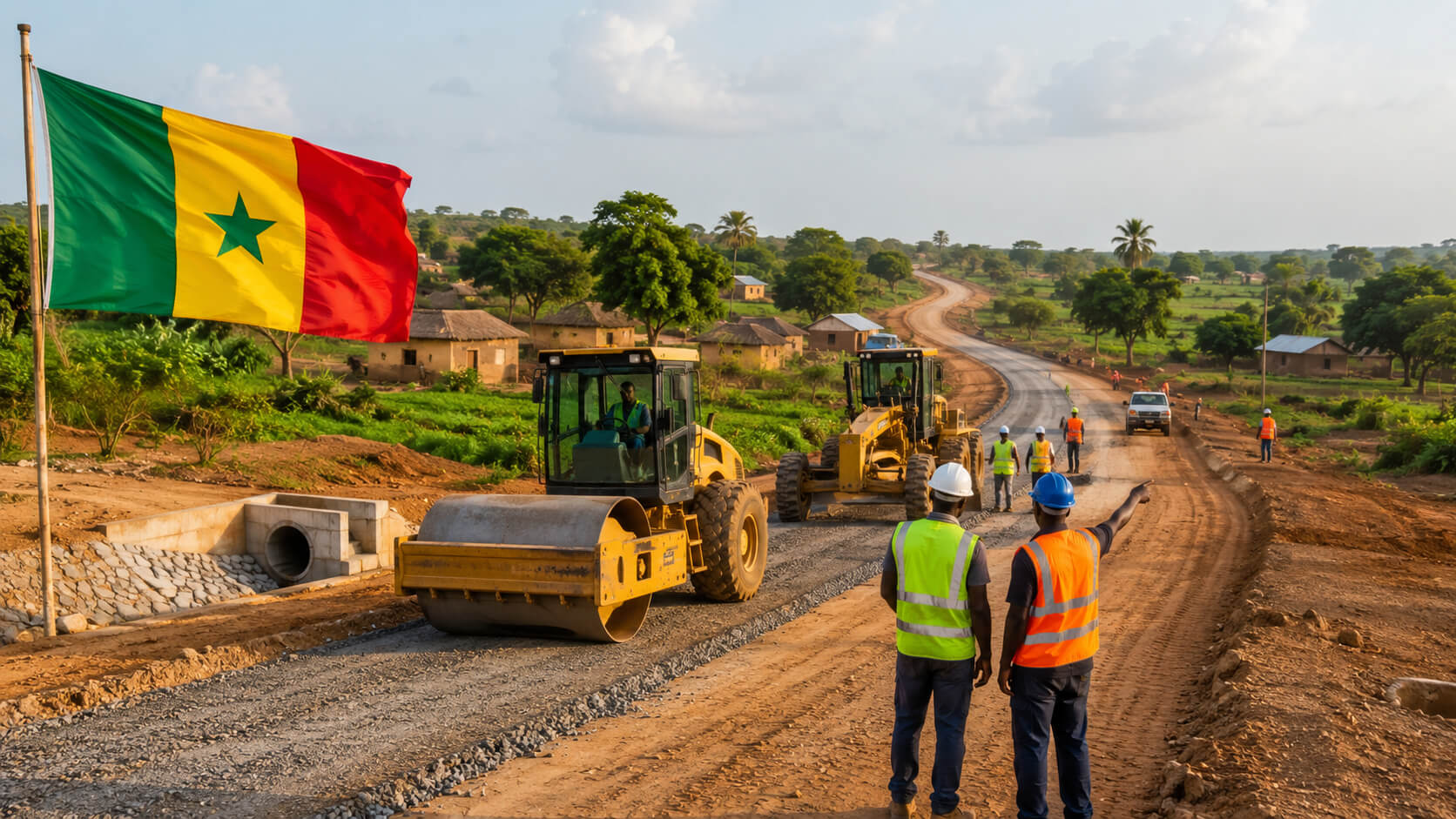
The financing will support the construction of 171 kilometres of paved roads and 104 kilometres of laterite rural tracks. These routes will include climate-resilience features intended to reduce damage from extreme weather and keep communities connected during difficult conditions.
That detail matters.
A road can look like progress on the day it opens and become a financial burden a few rainy seasons later. Flooding, erosion and heavier rainfall can damage surfaces, weaken foundations and cut off communities. Repairing the same sections repeatedly is expensive, particularly when maintenance budgets are already stretched.
Designing roads around future climate risks should give Senegal a better chance of protecting the investment rather than constantly rebuilding it.
The wider project has already delivered or upgraded about 414 kilometres of roads with stronger resilience features. Those earlier works have improved access to economic opportunities and services for approximately 350,000 people.
Better Roads Could Change What Farmers Earn
Rural connectivity often decides how much value farmers can capture from their own production.
A producer may have a strong harvest, but that does not help much when transport to the nearest buyer is unreliable or too costly. Middlemen gain more bargaining power. Post-harvest losses increase. Farmers may avoid producing larger volumes because getting those products to market creates another problem.
The Senegal road project is expected to reduce some of that pressure by improving access to agricultural areas, markets and community infrastructure.
“When a road connects an agricultural production area to an urban market, it does more than shorten a journey,” World Bank Division Director Djibrilla Issa said in announcing the financing.
It can help producers receive more value for their harvests while allowing women-led enterprises to reach new customers and rural communities to access wider economic opportunities, he added.
This is where transport infrastructure begins to look less like a construction story and more like agricultural policy.
Community Facilities Will Be Built Along the New Corridors
The programme does not stop at roads.
Funding will also be directed toward community infrastructure located within five kilometres of the upgraded routes. Planned facilities include agricultural processing platforms for women, storage centres, market spaces, water points, schools and health facilities.
That combination could make the investment more useful than a stand-alone transport project.
A reliable road helps farmers move their products. Nearby storage can reduce waste. Local processing creates a chance to sell higher-value goods rather than raw produce. Water infrastructure supports households and productive activity. Schools and clinics make the same road valuable even for residents who are not directly involved in agriculture.
Approximately 221,000 people living along the two new corridors are expected to gain improved connections to regional markets and essential services under the additional financing.
Women and Young People Are Central to the Project
The World Bank has placed particular emphasis on creating opportunities for women entrepreneurs and younger people.
Women already carry out a significant amount of agricultural production, food processing and local trading across Senegal. Their work does not always come with equal access to equipment, storage, finance or reliable transport.
The planned processing platforms could give women-owned businesses more room to turn agricultural goods into products with greater commercial value. Better roads may also allow them to reach customers outside their immediate communities.
Younger workers could benefit through road construction, logistics, processing, livestock services and other businesses that grow around more active trade corridors.
There are no guarantees. Infrastructure alone does not automatically create inclusive growth. Still, it removes one of the most stubborn barriers: physical isolation from markets and services.
Road Maintenance and Safety Are Included in the Funding
Building roads usually gets the attention. Maintaining them is the less glamorous part, and often the more important one.
The project’s third component will strengthen Senegal’s capacity in road safety and road asset management. This includes training and the purchase of management and monitoring tools aligned with international standards.
That should help authorities track road conditions, plan repairs and protect the network over a longer period.
Without proper maintenance, even climate-resilient infrastructure will deteriorate. The inclusion of asset management suggests the financing is meant to support the full life of the roads rather than just their construction.
Implementation will be handled by Senegal’s Road Works and Management Agency under the supervision of the Ministry of Infrastructure.
The Investment Supports Senegal Vision 2050
The financing is aligned with Senegal Vision 2050 and the country’s National Development Strategy for 2025–2029.
Both plans place stronger infrastructure, productive industries, job creation and more balanced territorial development near the centre of Senegal’s long-term economic direction.
Better rural transport fits naturally into that picture. It can lower the cost of doing business outside major cities, strengthen food supply chains and encourage investment in processing closer to farming communities.
It also supports the AgriConnect initiative, which aims to help rural producers participate in more efficient agricultural value chains.
The roads themselves are only one layer. The larger goal is to make agricultural regions more productive, better connected and less vulnerable to climate disruption.
Senegal’s $140 Million Road Financing Is Really About Access
The new World Bank funding gives Senegal more resources to address a basic but costly development problem.
People cannot take full advantage of farms, markets, schools, clinics or processing centres when reaching them remains difficult.
By combining paved roads, rural tracks, climate-resilient design, storage facilities and community infrastructure, the project takes a broader view of connectivity. That makes sense. A road is most valuable when it connects people to something useful at the other end.
For Senegal, the test will not be how many kilometres are announced. It will be whether transport costs fall, agricultural products reach markets faster and rural communities gain reliable access to services that previously felt much farther away.
Sources
Africa Sustainability Matters – World Bank Approves US$140 Million for Senegal to Expand Rural Roads