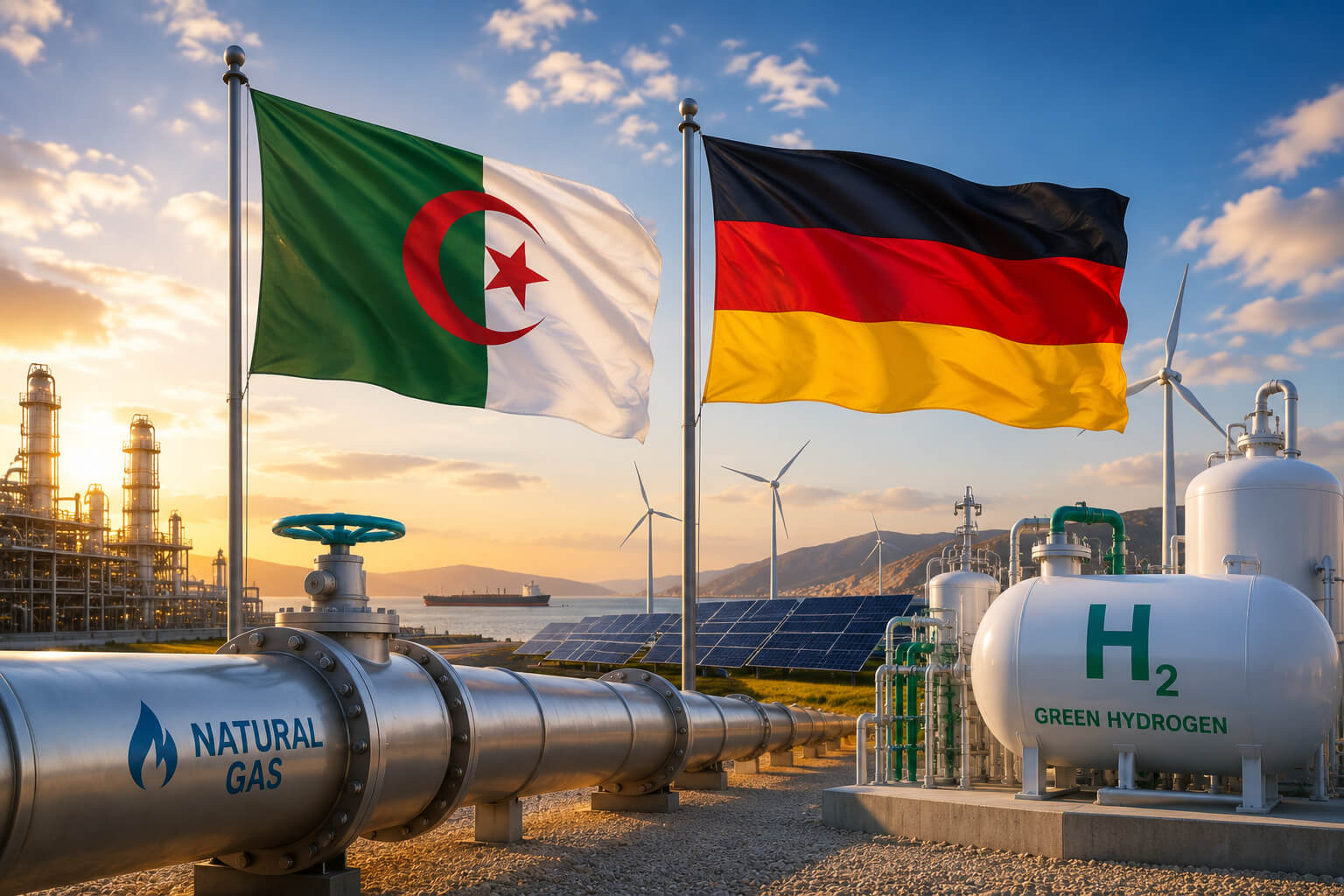
Algeria is not choosing between old energy and new energy right now. It is doing both.
State-owned Sonatrach is expanding its natural gas supply relationship with Germany while also pushing forward green hydrogen cooperation with German partners. That mix says a lot about where Europe’s energy transition actually stands in 2026. Cleaner energy is the goal, yes. But gas security still matters, especially for Germany, which has spent the past few years trying to rebuild its energy supply map after cutting its dependence on Russian gas.
The new Algeria-Germany energy push gives Sonatrach a stronger opening into Europe’s largest gas market. At the same time, it keeps Algeria in the conversation around future hydrogen corridors that could move clean fuel from North Africa into Europe. Not a small ambition.
Algeria Germany Energy Partnership Gets Bigger
Sonatrach will increase pipeline gas deliveries to Germany starting in 2027 under an expanded agreement with German energy group VNG, according to Ecofin Agency. The deal was reportedly signed on July 17, 2026, during Algerian President Abdelmadjid Tebboune’s official visit to Germany.
That timing matters. Germany has been trying to diversify its energy supply sources since the European energy crisis exposed how fragile old dependencies had become. Algeria, meanwhile, already has gas infrastructure, export experience, and a location that makes it difficult for Europe to ignore.
This is not just a one-off supply arrangement. It looks more like Algeria trying to lock itself into Europe’s next energy chapter before the rules are fully written.
Sonatrach Strengthens Its Role in Europe’s Gas Market
Sonatrach’s bigger gas deal with Germany gives Algeria more weight in Europe’s energy security conversation. Gas may not fit neatly into every clean energy headline, but it still plays a major role in keeping industry, power systems, and heating markets stable while renewable capacity grows.
That is the uncomfortable part of the transition. Europe wants to move faster on clean energy, but it also needs reliable supply during the shift.
For Algeria, this creates leverage. The country can offer near-term gas while promoting itself as a long-term green hydrogen supplier. Those two tracks may sound contradictory, but in energy politics they often move together.
Germany gets more supply options. Algeria gets a larger customer base. Sonatrach gets a stronger reason to invest in infrastructure that could later support lower-carbon exports.
Green Hydrogen Moves Into the Same Conversation
The gas deal is only one side of the story.
Sonatrach has also been building cooperation with German companies around green hydrogen. In June 2026, Sonatrach and Germany’s VNG AG signed a memorandum of understanding in Algiers to explore cooperation in green hydrogen and methane emissions reduction.
That agreement builds on Algeria’s wider plan to position itself as a future green hydrogen supplier to Europe. Sonatrach has also worked with European partners on studies linked to the SoutH2 Corridor, a proposed route for supplying Europe with hydrogen produced in Algeria.
This is where Algeria’s geography becomes a strategic asset. The country sits close to Europe, has existing energy ties, and has major solar potential. If hydrogen infrastructure becomes commercially workable, Algeria wants to be near the front of the queue.
The SoutH2 Corridor Could Change Algeria’s Energy Position
The SoutH2 Corridor is one of the big pieces in this puzzle. The idea is to move renewable hydrogen from North Africa toward European markets through an integrated corridor. Sonatrach says earlier cooperation agreements involve studies across the hydrogen value chain to assess whether producing green hydrogen in Algeria and supplying Europe through the corridor is feasible and profitable.
That last word matters: profitable.
Green hydrogen has big political support, but it still faces hard questions. Cost. Infrastructure. Water use. Renewable power supply. Long-term buyers. Certification. Transport losses. None of these are minor details.
Algeria has the ambition. Europe has the demand signal. But the corridor still needs to prove that it can move from announcement language into commercial reality.
Methane Reduction Adds Another Sustainability Layer
The Sonatrach-VNG cooperation is not only about future hydrogen. It also includes methane emissions reduction, according to Sonatrach’s June 2026 announcement.
That part deserves attention because methane leaks from gas production and transport can weaken the climate case for natural gas. If Algeria wants to sell more gas to Europe while also presenting itself as a clean energy partner, methane control becomes a serious issue.
It is not the glamorous side of sustainability. No big futuristic hydrogen image. No ribbon-cutting around a new corridor.
But cutting methane emissions can deliver faster climate benefits than many long-term promises. For Algeria and Sonatrach, stronger methane standards could also make gas exports more acceptable to European buyers facing tougher climate scrutiny.
Europe’s Energy Transition Still Needs Transitional Deals
This Algeria Germany energy partnership shows the messy middle of the energy transition.
Germany wants cleaner energy. It also needs secure supply. Algeria wants to remain a major gas exporter. It also wants to avoid being left behind as Europe moves toward lower-carbon fuels.
So the two sides are building a bridge between today’s gas trade and tomorrow’s hydrogen market. Maybe that bridge becomes a major clean energy corridor. Maybe it moves slower than expected. Energy projects often do.
Still, the direction is clear enough. Algeria does not want to be seen only as a fossil fuel supplier. Germany does not want to rely on one narrow supply chain again.
That is why this deal matters beyond the gas volumes. It is about positioning.
Algeria’s Clean Energy Bet Is Getting More Serious
Algeria has talked about green hydrogen before, but the difference now is that its hydrogen ambitions are being tied more directly to actual European energy relationships.
That gives the strategy more weight. A future hydrogen market cannot grow on plans alone. It needs buyers, pipelines, standards, financing, and political trust.
Sonatrach’s expanded work with German partners gives Algeria a route to build that trust while continuing to serve Europe’s immediate gas needs. It is not a perfect climate story. It is not meant to be. It is a practical one.
The sustainability question is whether Algeria can use today’s gas revenues and infrastructure relationships to accelerate tomorrow’s cleaner energy exports. If it can, the country could become more than a gas supplier. It could become one of Europe’s key North African energy transition partners.
For now, the signal is simple: Algeria is moving deeper into Germany’s energy market, and it wants green hydrogen to be part of the next deal, not an afterthought.
Sources
- Africa Sustainability Matters – Algeria expands energy partnership with Germany as Sonatrach secures bigger gas exports and advances green hydrogen corridor
- Ecofin Agency – Sonatrach Secures Larger Share of Germany’s Gas Market with Expanded Supply Deal
- Sonatrach – SONATRACH and the German company VNG AG sign a Memorandum of Understanding
- Sonatrach – SONATRACH strengthens its strategic cooperation with its European partners for the development of green hydrogen
- Africa Business Insight – Sonatrach expands green hydrogen push as Algeria targets European energy market