
Egypt is looking at battery storage on a much bigger scale.
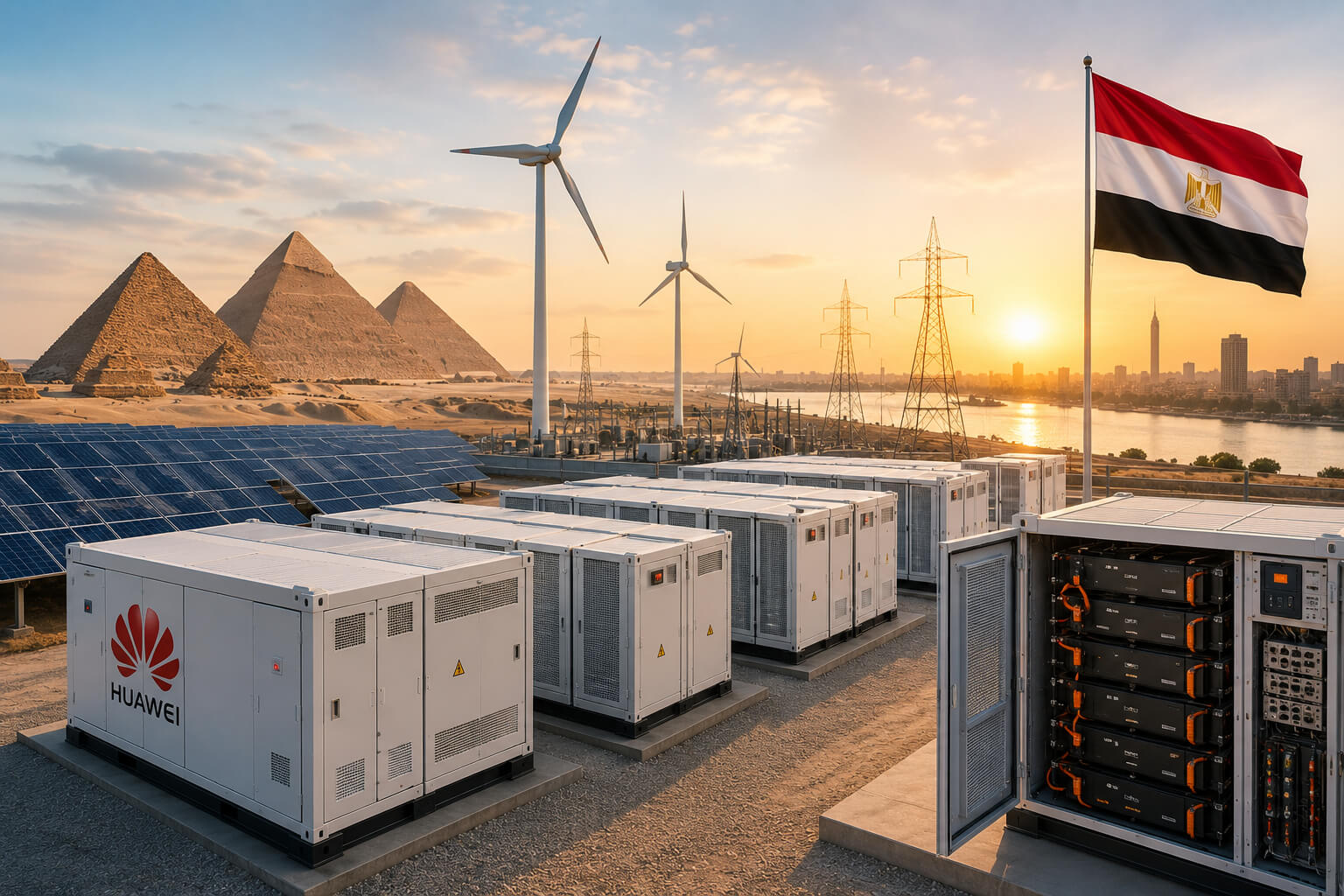
The country is exploring a potential 4,000 MWh battery energy storage programme with Huawei, a move that could support renewable energy growth while helping modernise the national electricity grid.
The talks also include possible local manufacturing of battery storage systems in Egypt. That matters because this is not only about adding batteries. It is also about building the infrastructure, industrial capacity and grid flexibility needed for a larger renewable energy system.
The project is still under discussion, so it should not be treated as a final construction deal yet.
Egypt and Huawei Are Discussing a 4,000 MWh Storage Programme
Egyptian Electricity and Renewable Energy Minister Mahmoud Esmat met Huawei Egypt CEO Benjamin Hou to discuss the proposed battery storage programme. The talks covered the possibility of developing standalone energy storage stations with a combined capacity of around 4,000 MWh. Egyptian authorities are also reviewing possible locations, technical requirements and the economics of the programme before moving further.
Battery Storage Is Becoming More Important for Egypt
Egypt has been expanding solar and wind generation, but renewable energy brings a familiar challenge. Solar output rises during the day and falls after sunset, while wind generation can change with weather conditions. Battery storage can absorb excess electricity when renewable generation is high and release it later when demand increases. That gives the grid more flexibility and can reduce pressure during peak periods.
Egypt Wants More Renewable Energy in Its Power Mix
The country’s clean energy strategy is becoming more ambitious. Egypt has been pushing to increase the share of renewable and clean energy in its electricity mix, with government targets calling for a much larger contribution from solar, wind and other low-carbon sources. As that share grows, storage becomes more important because the grid must manage electricity that does not arrive at a constant rate throughout the day.
Egypt Has Already Started Using Large-Scale Batteries
The proposed Huawei programme would build on battery projects that are already taking shape in Egypt. AMEA Power’s Abydos Solar project in Aswan combines a 500 MW solar plant with a 300 MWh battery energy storage system. Another planned development, Abydos II, is expected to combine 1,000 MW of solar generation with 600 MWh of storage. These projects show that battery storage is already moving into Egypt’s utility-scale energy market.
Local Battery Manufacturing Could Change the Economics
One of the more interesting parts of the Huawei discussions is the possibility of manufacturing battery energy storage systems locally. If Egypt can build more of this equipment domestically, it could reduce dependence on imported systems while creating new industrial opportunities. Local production could also support engineering, maintenance, assembly and technical services linked to the country’s renewable energy sector.
Storage Could Help Egypt Reduce Pressure on Conventional Power
Battery systems can also reduce the need to rely as heavily on conventional power plants during periods of high electricity demand. When solar generation falls in the evening, batteries can release electricity stored earlier in the day. That does not remove the need for gas-fired or other conventional generation, but it can make the overall system more efficient and reduce the amount of fuel needed during certain periods.
Grid Modernisation Is Becoming Just as Important as New Generation
Adding more renewable energy is only part of the challenge. Egypt also needs a grid that can handle changing electricity flows, respond quickly to demand and move power efficiently across the country. Battery storage can support that shift by improving flexibility, helping manage fluctuations and giving grid operators more control over when electricity is delivered.
The Location of New Battery Systems Will Matter
The proposed storage stations are expected to be considered for different locations across Egypt’s electricity network. That approach could make more sense than building one enormous battery facility. Storage placed near renewable energy projects can help absorb excess generation, while batteries located closer to major demand centres can support local grid stability and reduce pressure on transmission infrastructure.
Financing Will Be a Major Part of the Project
A 4,000 MWh storage programme would require significant investment. Utility-scale batteries have become cheaper, but large projects still involve high upfront costs. Financing conditions, battery prices, electricity market rules and project revenues will all influence whether the programme moves ahead. Egypt’s existing battery projects have already shown the importance of international financing and climate-linked investment in getting large storage developments off the ground.
Egypt Could Become a Major Battery Storage Market in Africa
If the Huawei programme advances, Egypt could emerge as one of Africa’s larger utility-scale battery storage markets. The country already has strong solar resources, growing renewable energy capacity and a large electricity system. Adding more storage could make Egypt an important case study for other African countries trying to expand renewable energy without compromising grid reliability.
Egypt’s Energy Transition Is Moving Into a New Phase
For years, renewable energy growth was mainly measured by how much solar and wind capacity a country could install. That is starting to change. The bigger question now is how effectively that electricity can be stored, managed and delivered when people actually need it. Egypt’s proposed 4,000 MWh battery storage programme with Huawei reflects that shift. The plan is not final yet, but it points toward a more flexible, storage-heavy energy system.
Sources
- African Sustainability Matters — Egypt’s 4,000 MWh Huawei battery storage plan signals new phase in renewable energy and grid modernization
https://africasustainabilitymatters.com/egypts-4000-mwh-huawei-battery-storage-plan-signals-new-phase-in-renewable-energy-and-grid-modernization/ - Egypt State Information Service — Ministry of Electricity updates on Huawei battery storage discussions
https://sis.gov.eg/ - Egypt State Information Service — Egypt-China discussions on grid modernisation and renewable energy integration
https://sis.gov.eg/en/media-center/news/egypt-china-s-csgi-discuss-grid-modernization-renewable-energy-integration/ - Presidency of Egypt — Renewable energy and electricity-sector updates
https://www.presidency.eg/