Nigeria’s low-carbon transition is starting to move beyond policy pledges and into a harder conversation about coordination, investment and execution. Sustainability stakeholders are now calling for the creation of a dedicated decarbonisation hub that could bring together government agencies, private companies, investors, researchers and development partners.
The proposal gained attention during the 2026 World Decarbonisation Day event in Lagos. Discussions focused on how Nigeria can reduce emissions without slowing industrial growth, while also creating new opportunities through the country’s expanding blue economy.
Nigeria Decarbonisation Hub Could Bring Climate Efforts Together
Nigeria already has government programmes, private-sector initiatives and international partnerships focused on climate action. The challenge is that many of these efforts operate separately. A dedicated decarbonisation hub could provide a central point where businesses, policymakers, investors and technical experts work on projects together rather than moving in different directions.
The idea is not simply to create another organisation that holds conferences. Supporters want the hub to help develop projects, identify financing opportunities, connect technology providers with local companies and move promising ideas toward commercial deployment. If structured well, it could make Nigeria’s climate ambitions more practical and easier for investors to understand.
Blue Economy Growth Is Becoming Part of Nigeria’s Climate Strategy
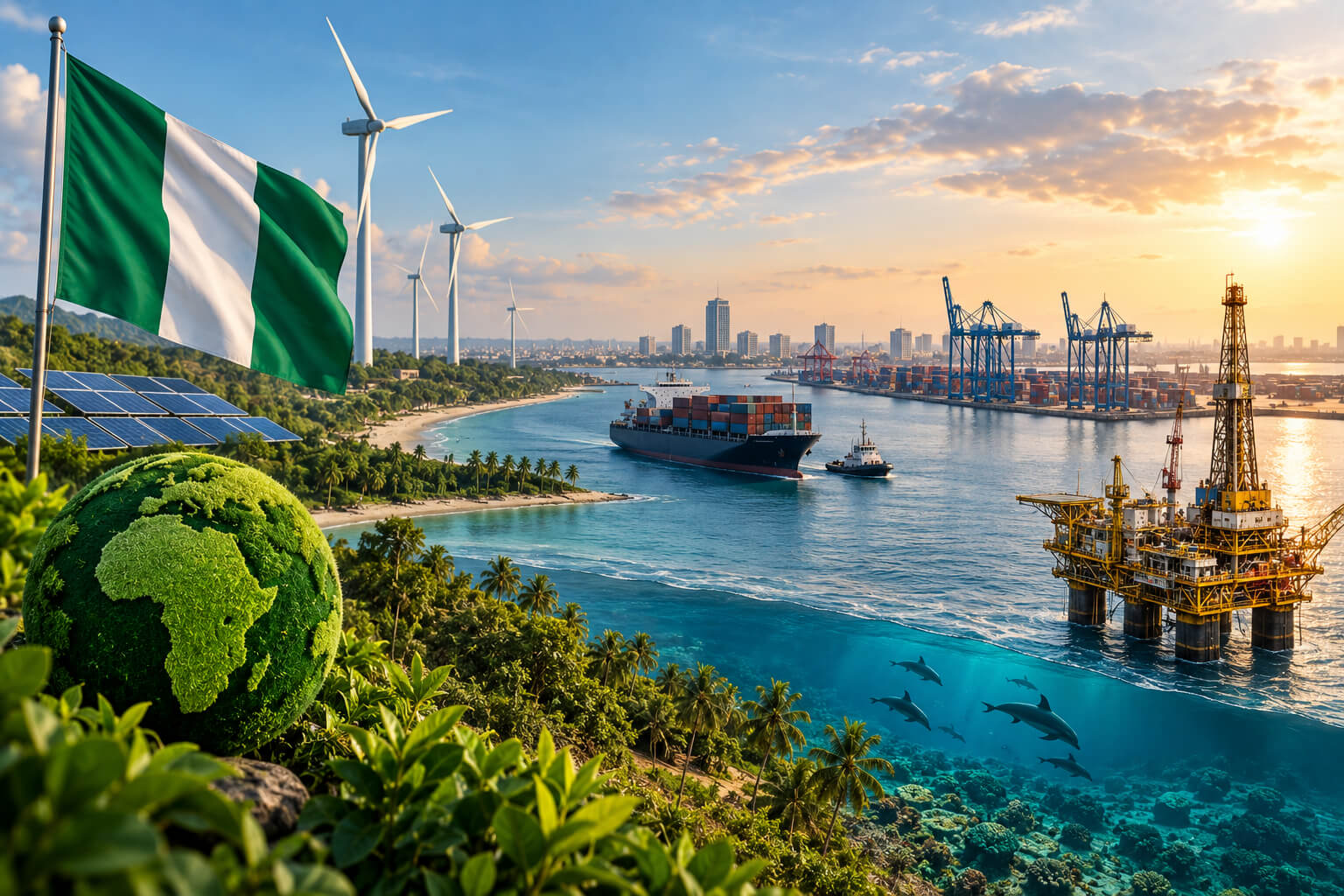
Nigeria’s blue economy is increasingly being discussed as part of the country’s wider sustainability agenda. Its coastline, ports, inland waterways and offshore infrastructure give the country several opportunities across shipping, fisheries, marine services, coastal tourism and renewable energy.
That opportunity also comes with environmental pressure. Expanding maritime activity without considering emissions, coastal protection and ecosystem health could create long-term problems. This is why sustainability stakeholders are pushing for a model where blue economy growth and decarbonisation happen at the same time rather than being treated as separate priorities.
A decarbonisation hub could help bring those conversations together. Instead of focusing only on traditional energy projects, the platform could support cleaner shipping, low-carbon ports, offshore renewable energy and coastal ecosystem restoration.
Oil and Gas Could Play a Major Role in the Transition
Nigeria’s oil and gas sector remains central to the economy, so any serious decarbonisation strategy will have to include it. The sector has several options for reducing emissions, particularly through cutting methane leaks, reducing routine gas flaring, improving energy efficiency and using cleaner sources of power at production facilities.
There is also growing interest in technologies such as carbon capture, hydrogen and electrification. These solutions will not replace the existing energy system overnight, but they could gradually lower emissions while helping companies prepare for changing global energy markets.
The maritime sector is closely connected to this discussion because offshore oil and gas operations depend heavily on ports, ships and marine logistics. That creates room for joint decarbonisation strategies rather than treating each industry separately.
Cleaner Shipping Could Support Nigeria’s Maritime Expansion
Shipping is another area where Nigeria could reduce emissions while expanding commercial activity. Ports and vessels form an important part of the country’s trade infrastructure, but they also contribute to fuel consumption and pollution.
Cleaner fuels such as green methanol, ammonia and hydrogen are gaining attention globally as the shipping industry searches for alternatives to conventional marine fuels. Shore-side electricity, more efficient vessels and improved route planning could also lower emissions.
Nigeria does not need to adopt every technology immediately. What matters is creating conditions where companies can test new systems, measure results and eventually scale the solutions that make economic sense.
Mangroves and Wetlands Could Become Valuable Climate Assets
Some of Nigeria’s strongest climate assets already exist naturally. Mangroves, wetlands and other coastal ecosystems can absorb carbon, protect coastlines, support biodiversity and provide livelihoods for surrounding communities.
These ecosystems are becoming more important as interest in blue carbon grows. Blue carbon projects focus on the ability of coastal environments to capture and store carbon, creating possible opportunities for carbon credits and climate finance.
That could turn ecosystem protection into something with stronger economic value. Restoring mangroves, for example, can support local communities while also contributing to emissions reduction. If properly measured and verified, these projects could attract both local and international investment.
Nigeria’s Net-Zero Target Requires More Than Policy
Nigeria has committed to reaching carbon neutrality by 2060, but achieving that goal will require changes across several parts of the economy. Power generation, transport, industry, cooking and oil and gas are all included in the country’s transition plans.
The difficulty is that Nigeria must decarbonise while still expanding access to energy and supporting economic growth. Electricity demand will continue rising, cities will keep expanding and industries will need more reliable power.
That means the transition cannot simply be about reducing energy use. It has to focus on changing where energy comes from, improving efficiency and deploying cleaner technologies without slowing development.
Financing Remains One of the Biggest Challenges
Nigeria’s transition will require enormous amounts of capital over the coming decades. Estimates cited in discussions around the country’s climate strategy suggest that the investment required could reach around $1.9 trillion by 2060.
That level of financing will not come from government alone. Private investors, development banks, energy companies, international partners and local financial institutions will all need to play a role.
This is where a Nigeria decarbonisation hub could become particularly useful. By connecting investors with credible projects, the platform could help reduce the gap between climate ambition and actual financing. Investors are more likely to commit money when projects are clearly structured, supported by policy and backed by reliable data.
Carbon Markets Could Create New Economic Opportunities
Nigeria is also developing its carbon market, creating another possible source of finance for low-carbon projects. Carbon markets allow verified emissions reductions to generate tradable credits, which companies can purchase as part of their climate strategies.
This could create opportunities across renewable energy, forest protection, mangrove restoration, waste management and energy efficiency. It may also create new jobs in carbon accounting, environmental verification, project development and climate finance.
The challenge will be maintaining credibility. Poorly managed carbon projects can quickly lose investor confidence. Nigeria will need strong standards, transparent verification and clear regulations if it wants to attract serious carbon-market investment.
Collaboration Between Government and Industry Will Be Essential
Government agencies can create policies and regulations, but private companies will ultimately build and operate many of the projects needed for Nigeria’s low-carbon transition. That makes collaboration especially important.
Businesses need stable policies before committing long-term capital. Investors also need confidence that regulations will remain predictable. At the same time, government agencies need companies to provide data, technology and practical experience from the market.
A decarbonisation hub could provide a regular meeting point where those conversations happen early rather than after problems appear.
Nigeria Has an Opportunity to Link Climate Action With Economic Growth
The strongest argument for a Nigeria decarbonisation hub is that climate action does not have to operate separately from economic development. Cleaner energy, modern ports, coastal restoration, carbon markets and low-emission industrial projects can all create new business opportunities.
Nigeria has significant natural resources, a large domestic market and an established energy sector. It also has growing interest from international investors looking for projects linked to renewable energy, climate finance and sustainable infrastructure.
The real challenge is turning that potential into projects that actually reach the market.
A decarbonisation hub will not solve every problem facing Nigeria’s energy transition. Still, it could provide something the country increasingly needs: a place where ideas, capital, policy and technical expertise meet before opportunities disappear into another round of discussions.
Sources
African Sustainability Matters – Nigeria urged to establish decarbonisation hub to coordinate low-carbon transition and unlock blue economy growth
https://africasustainabilitymatters.com/nigeria-urged-to-establish-decarbonisation-hub-to-coordinate-low-carbon-transition-and-unlock-blue-economy-growth/
News Agency of Nigeria – Unlocking Nigeria’s Blue Economy Potential for Growth
https://nannews.ng/unlocking-nigerias-blue-economy-potential-for-growth/